
The Pufferfish Emoji 🐡: What It Actually Means in 2026 Meme Culture
August 19, 2026 · Bas Hennekam
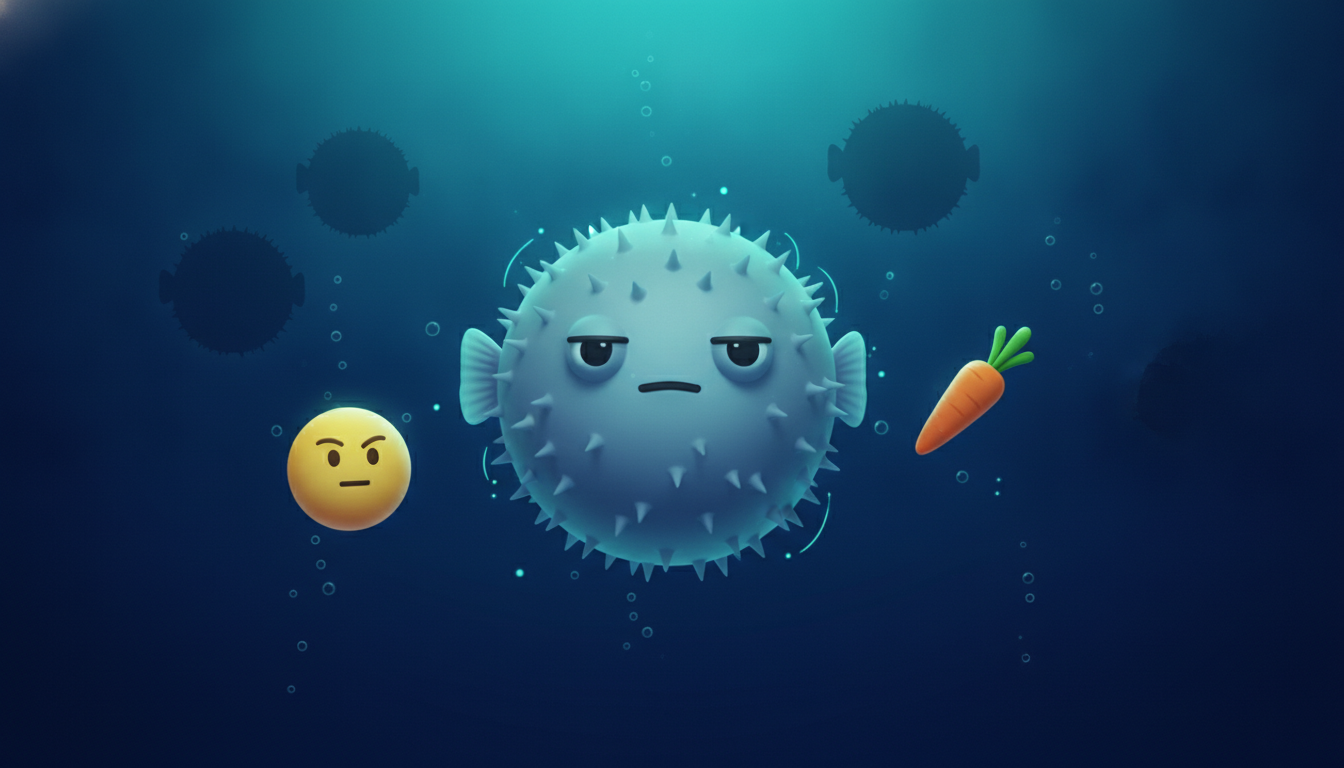
Someone posts a mildly cringe opinion in a group chat. Instead of a laughing face or a skull, the reply is just 🐡. No caption, no context needed. Everyone in the thread already knows what it means: I am inflating right now. That single fish emoji has quietly become one of the most efficient ways to signal "this is annoying me in a way I find funny" without typing a single word, and it did it almost entirely through video memes rather than through official Unicode branding.
The short version: 🐡 now works as a stand-in for ironic, exaggerated annoyance or overreaction, borrowed directly from the real biology of pufferfish, which puff up into a spiky ball when threatened or provoked. Online, that instinct got flattened into a joke: something small and low-stakes happens, and the reaction is to "puff up" like the fish, signaling mock outrage rather than real anger.
Where the Meme Actually Started
The pufferfish emoji's meme status traces back to viral aquarium and diving footage of real pufferfish reacting dramatically to small stimuli, most famously clips of pufferfish lighting up and rapidly inflating the moment they spot a piece of food, usually a carrot or a shrimp, held just out of reach. The fish goes from calm to fully puffed and darting toward the camera in under two seconds. Clipped, looped, and captioned, that footage became a go-to reaction format for "when something excites or annoys me way more than it should."
From there the emoji took over as the text-friendly version of the same joke. Where a video reaction needs a link or an upload, 🐡 fits directly into a comment, a caption, or a text reply, which is exactly why it spread faster in comment sections than the source clips ever did on their own.
Why a Fish Became the Face of Overreaction
Pufferfish inflation is a genuinely dramatic, involuntary defense mechanism. The fish swallows water or air fast, its body doubles or triples in size within seconds, and its spines stand on end, all as a real survival response to a threat. That is a lot of visible drama for what is, biologically speaking, a small fish trying not to get eaten.
Online, that gap between the size of the trigger and the size of the reaction is the entire joke. Nobody actually thinks getting tagged in a group chat is a life-or-death threat. Using 🐡 says the opposite on purpose: I know this is a tiny, silly thing, and I am choosing to react like it is a five-alarm emergency anyway. That self-aware exaggeration is the same comedic engine behind other irony-driven emoji trends, just with a more visual, more specific mascot than a generic "I am dying" skull.
How People Actually Use It
In practice, 🐡 shows up in a few recurring patterns:
- Solo reaction: Just the emoji, dropped as a reply to something mildly ridiculous, cringe, or annoying, with zero explanation expected.
- Escalation combo: Paired with 🥕 to directly reference the carrot-chasing video format, often meaning "you just dangled something in front of me and now I am unreasonably invested."
- Stacked inflation: Multiple 🐡🐡🐡 in a row to signal maximum, over-the-top puffing, used for things that are only slightly more annoying than a single-fish situation.
- Self-tagging: People captioning their own posts with 🐡 to preemptively label their own reaction as an overreaction, a kind of built-in disclaimer that keeps the tone light.
The common thread across all four is that the emoji almost never signals genuine anger. It is a de-escalation tool disguised as an escalation emoji, letting someone express irritation while explicitly framing it as a bit.
Pufferfish vs the Rest of the Irony Emoji Lineup
The pufferfish did not invent ironic overreaction online. It joined an existing family that includes 💀 for "this killed me," 🙄 for flat exasperation, and 😐 for deadpan nothing-to-see-here energy. What sets 🐡 apart is specificity. Where 💀 can mean almost any flavor of "funny" and 🙄 covers almost any flavor of "tired of this," 🐡 is narrower: it is reserved specifically for small, provoke-able annoyance, the kind of thing that makes you visibly puff up for a second before you laugh it off. That narrower lane is part of why it caught on. Gen Z's meme vocabulary increasingly rewards specificity over general-purpose reactions, and a fish that only means one very particular flavor of mock outrage fills a gap the older staples left open.
It also benefits from being visually self-explanatory in a way text abbreviations are not. Anyone who has seen even one pufferfish inflation clip understands the reference instantly, no glossary required, which lowers the barrier for the meme to spread across platforms and even across languages.
Using It Without Getting It Wrong
- Keep it light. 🐡 reads as playful irritation, not real conflict. Using it in a genuinely serious disagreement will land as tone-deaf rather than funny.
- Skip it in professional messages. Like most reaction-emoji-first trends, this one lives in casual DMs, comment sections, and group chats, not client emails or performance reviews.
- Pair it sparingly. One 🐡 does the job. Stacking it works for comedic effect occasionally, but overusing the combo dilutes the punchline fast.
- Know your audience. Older or less terminally-online recipients may read 🐡 as random rather than pointed, since the reference depends entirely on having seen the source meme format.
What Comes Next
Reaction emoji built around a single viral animal clip tend to have a shorter shelf life than emoji tied to a broader concept, since the joke depends on the audience still remembering the source video. Expect 🐡 to stay in heavy rotation through the rest of 2026 while the carrot-chasing clips keep resurfacing on short-form video, then gradually get replaced by whatever the next over-the-top animal reaction turns out to be. Until then, it remains one of the cleanest one-emoji ways to say "this bothered me for exactly four seconds, and I regret nothing."