Pride Emoji Meanings: A Complete Guide to Rainbow, Flag, and LGBTQ+ Symbols
May 15, 2026 · Bas Hennekam
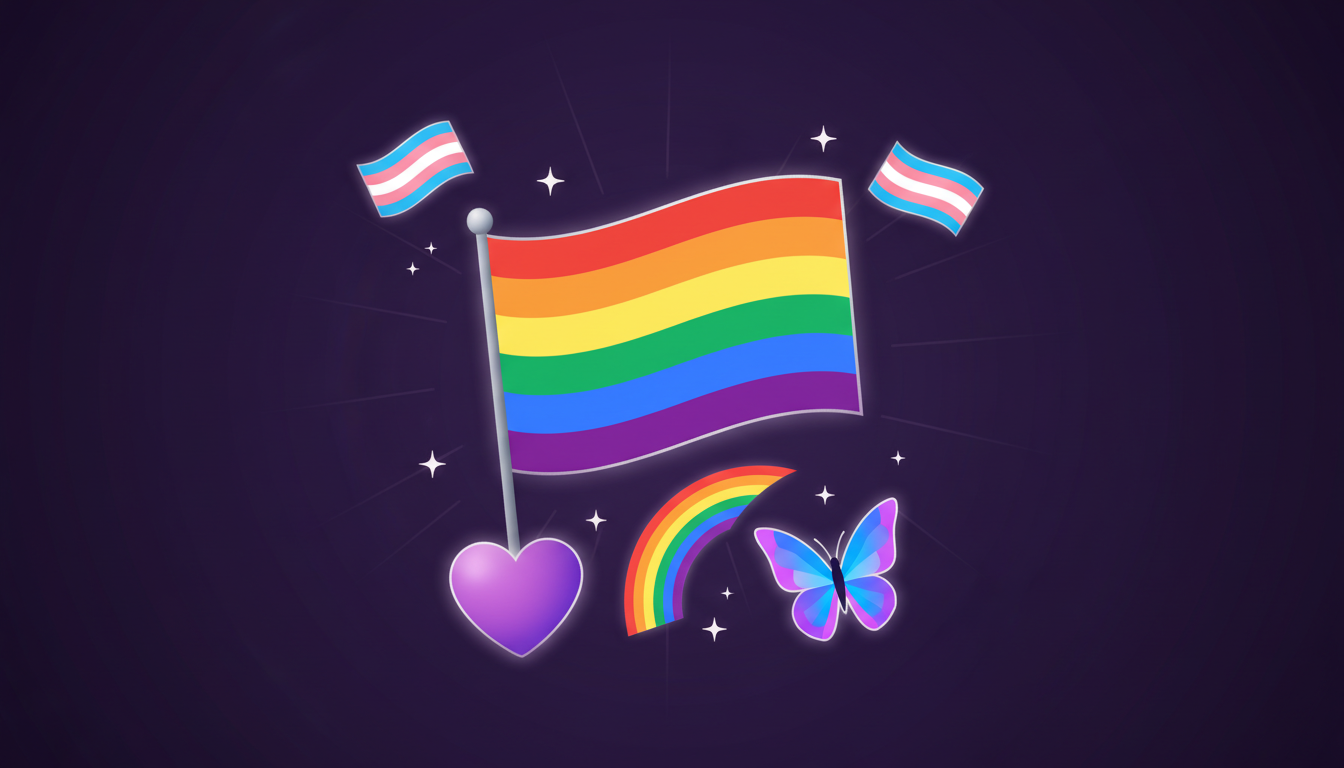
Every June, group chats, captions, and corporate profile pictures fill with rainbows. The shift is visible in the data. According to Emojipedia and major messaging platforms, use of the 🏳️🌈 rainbow flag emoji rises by roughly 270% in June compared to its yearly average, making it the single sharpest seasonal emoji spike outside of Christmas and Valentine's Day. But Pride emoji vocabulary has grown far beyond a single flag, and using these symbols well means knowing what they actually represent.
Why Pride Emojis Matter
Pride emojis are more than decoration. They are identity markers, allyship signals, and conversational shorthand for a specific kind of welcome. A 2025 GLAAD report on digital communication found that 64% of LGBTQ+ adults read a profile or message including 🏳️🌈 or 🏳️⚧️ as a meaningful sign of safety, while 71% of allies under 30 use Pride emojis at least once a month. That makes these tiny glyphs one of the most active corners of emoji culture.
Unicode now supports 11 distinct Pride and identity flags through Zero Width Joiner (ZWJ) sequences, plus a growing set of related symbols. Knowing the difference matters, both for personal expression and for brands trying to communicate respectfully.
The Core Pride Flag Emojis
These are the flags most commonly used during Pride Month and year-round in LGBTQ+ communities.
🏳️🌈 Rainbow Flag
The most recognized symbol of LGBTQ+ pride worldwide. Designed by Gilbert Baker in 1978, the rainbow flag stands for the diversity of the community. Each original stripe carried meaning: red for life, orange for healing, yellow for sunlight, green for nature, blue for serenity, violet for spirit. The emoji version uses the modern six-stripe variation. In digital communication, 🏳️🌈 functions as a broad statement of identity or support and is by far the most-used Pride emoji.
🏳️⚧️ Transgender Flag
Added to Unicode in 2020. The flag, designed by Monica Helms in 1999, features light blue, pink, and white stripes. Light blue and pink represent traditional colors for boys and girls; white stands for those who are transitioning, intersex, or who identify outside the binary. Use of 🏳️⚧️ has grown by more than 400% since its addition and now serves as the primary digital symbol for trans visibility and allyship.
🌈 Rainbow
Predates the flag emoji and remains a softer, more general way to signal LGBTQ+ themes, joy, or hope. Brands often use 🌈 in early-June campaigns as a gentler entry point before the more specific 🏳️🌈.
Identity-Specific Symbols
While Unicode does not yet support every Pride flag as a dedicated emoji, several symbols are widely used to represent specific identities.
- ⚧️ Transgender Symbol. A combined symbol blending male, female, and combined gender markers. Often used in bios and trans-affirming content.
- ♀️ Female Sign / ♂️ Male Sign. Used in combination (♀️♀️, ♂️♂️, ♀️♂️) to indicate orientation in some contexts, though usage has declined as more inclusive language has taken over.
- 🫂 People Hugging. Frequently paired with Pride symbols to communicate community, support, and care.
Color and Heart Combinations
Because Unicode does not yet support flag emojis for every identity, the community has built a working vocabulary using colored hearts. These combinations are widely understood in LGBTQ+ spaces and form a kind of digital signal language.
- 💗💜💙 Bisexual Flag Colors. Pink, purple, and blue represent attraction to the same gender, all genders, and other genders.
- 💛🤍💜🖤 Non-binary Flag Colors. Yellow, white, purple, and black represent the non-binary identity flag.
- 💖💜💙 Genderfluid or Bi. Often used interchangeably; context usually clarifies.
- 🖤🩶🤍💜 Asexual Flag Colors. Black, gray, white, and purple, in that order, mirror the asexual pride flag.
- 💗💛💙 Pansexual Flag Colors. Pink, yellow, and blue represent attraction regardless of gender.
- 🩷🤍🩵 Trans Flag Colors. Used when 🏳️⚧️ feels too on-the-nose or when the flag emoji is unavailable.
In data shared by Twitter, now X, in 2023, heart-color combinations representing identity flags rose to become some of the most-used emoji clusters during Pride Month, especially among Gen Z users.
Symbols of Allyship and Support
Not every Pride-adjacent emoji is a flag. A few symbols have taken on supportive meaning over time.
- 💜 Purple Heart. Often used as a stand-in for queer love and ally support, partly because purple sits at the historical crossroads of feminist and LGBTQ+ symbolism.
- 🦋 Butterfly. Embraced by trans communities as a metaphor for transformation. Now widely used in trans-affirming content.
- 🌹 Rose. A long-standing symbol in queer history, especially in references to gay rights and the AIDS memorial movement.
- 🕊️ Dove. Used in posts honoring lives lost to anti-LGBTQ+ violence, particularly around Trans Day of Remembrance and Pulse memorials.
- 🪩 Disco Ball. A nod to queer nightlife history. Common in Pride party promos and nostalgic content about Stonewall-era nightlife.
How Brands Are Using Pride Emojis
Brand use of Pride emojis is closely watched. A 2025 study from Sprout Social found that posts using 🏳️🌈 in June drive 31% more engagement than non-Pride posts from the same accounts. But the same study found that audiences are quick to flag "rainbow washing," where a logo turns rainbow for a month without matching policy.
The patterns that perform best:
- Specific, not generic. Posts that use 🏳️⚧️ alongside 🏳️🌈, or include identity-color heart combinations, perform 22% better than posts that use only the rainbow flag.
- Year-round usage. Brands that include Pride symbols in supportive content outside of June see significantly higher trust scores from LGBTQ+ audiences.
- Pair with action. A flag emoji works best when it sits next to a concrete action: a donation, a policy update, a community spotlight.
Cross-Cultural Notes
Pride emoji usage varies sharply by region. In countries with strong legal protections, the flag emojis appear in bios and corporate profiles freely. In countries where LGBTQ+ expression is restricted, users often substitute color-only combinations like 💗💜💙 or 🌈 to signal identity less visibly. Some platforms in certain regions have at times restricted access to the 🏳️🌈 and 🏳️⚧️ emojis, making heart-color shorthand a quiet form of resilience.
Combinations Worth Knowing
A few combinations have become Pride staples.
- 🏳️🌈✨: Joyful celebration or Pride event
- 🏳️⚧️💖: Trans love and support
- 🫂🌈: Community and welcome
- 🪩🏳️🌈: Pride party or nightlife
- 🌹🕊️: Remembrance and tribute
- 🦋💜: Trans solidarity and transformation
These short pairings often communicate more than a full sentence in queer digital spaces.
Practical Tips for Using Pride Emojis Well
- Know what each flag means. Using the wrong color combination can read as careless. A quick check before posting goes a long way.
- Default to inclusion. When in doubt, 🏳️🌈 and 🏳️⚧️ together are a strong, simple signal.
- Don't only show up in June. Year-round use, even occasional, lands more authentically.
- Match emoji to context. A Pride party flyer can carry 🪩🌈✨ comfortably. A condolence post should not.
Looking Ahead
Unicode proposals for additional identity flag emojis (lesbian, bisexual, pansexual, non-binary, asexual) are under active discussion, and the next round of Unicode releases is widely expected to include at least one. Until then, the heart-color combinations the community has built will continue to do the heavy lifting. Whatever shape the vocabulary takes next, the underlying principle stays the same: use these symbols on purpose, with care, and the small rainbow on the screen can carry a surprising amount of weight. 🏳️🌈