
The Most Popular Emojis of 2025 and What They Mean
March 8, 2026 · Bas Hennekam
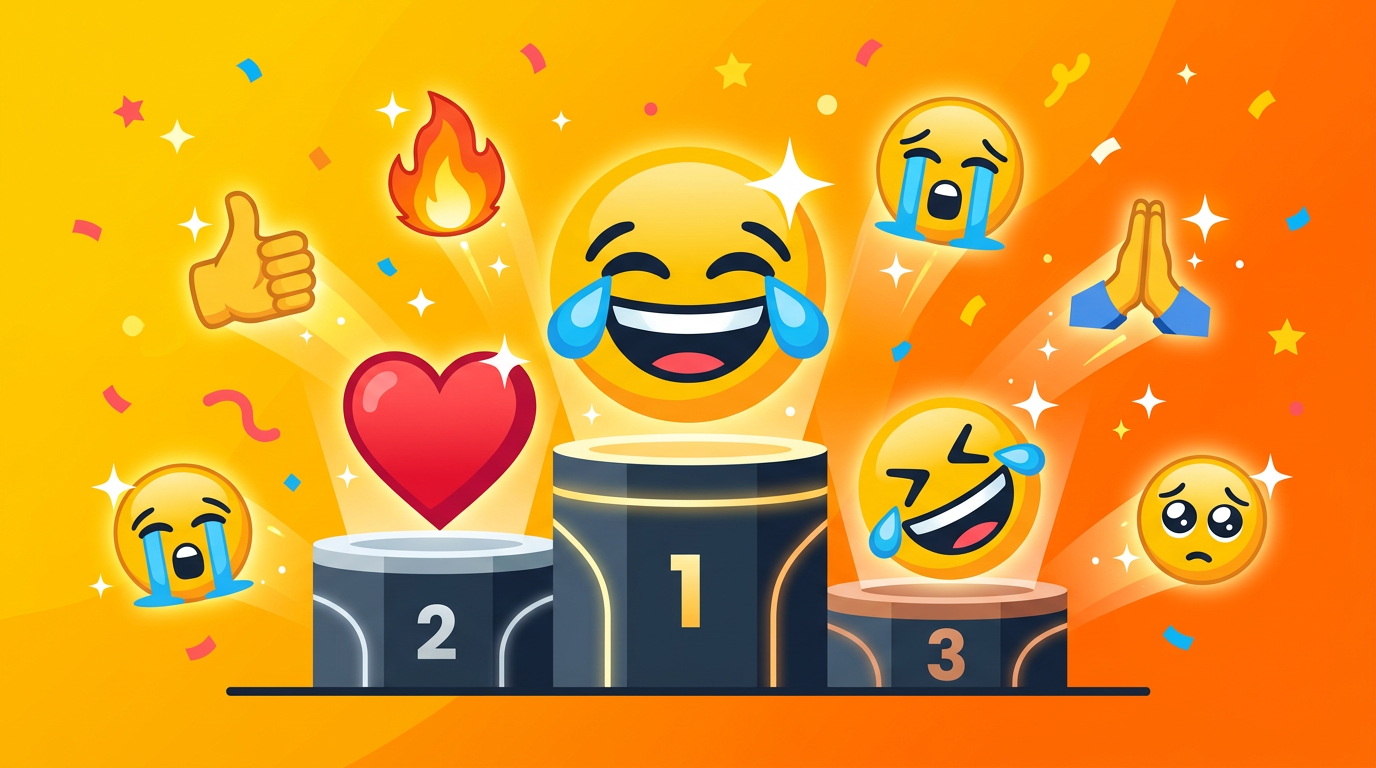
Every year, the Unicode Consortium and various analytics platforms release data on emoji usage, and every year the results tell a fascinating story about how we communicate. The 2025 rankings are in, and while some familiar faces hold their ground, there are notable shifts that reflect broader cultural trends.
The Top 10 Most Used Emojis of 2025
Here are the emojis that dominated keyboards worldwide in 2025:
- 😂 Face with Tears of Joy. Still the undisputed champion. Despite annual predictions of its decline, 😂 continues to top every usage chart. It accounts for nearly 5% of all emoji use globally.
- ❤️ Red Heart. The universal symbol of love and affection holds steady at number two. Simple, sincere, and impossible to misinterpret.
- 🤣 Rolling on the Floor Laughing. Gaining ground on 😂, particularly popular in messaging apps and social media comments across Southeast Asia and Latin America.
- 👍 Thumbs Up. The workhorse emoji of professional communication. Its dominance in Slack and Teams keeps it firmly in the top five.
- 😭 Loudly Crying Face. Don't be fooled by the tears. In 2025, 😭 is overwhelmingly used to express being overwhelmed with laughter, empathy, or emotional resonance, not sadness.
- 🙏 Folded Hands. Whether interpreted as "thank you," "please," or "prayer," this emoji transcends cultural boundaries and is especially popular in professional and heartfelt contexts.
- 🔥 Fire. The go-to emoji for anything impressive, trendy, or exciting. From complimenting someone's outfit to hyping a new product launch, 🔥 is everywhere.
- 😍 Smiling Face with Heart-Eyes. Used to express admiration, love, and enthusiasm. Popular in response to photos, products, and travel content.
- 🥹 Face Holding Back Tears. The breakout star of recent years. Added in 2022, it's rapidly climbed the charts as the emoji of choice for expressing being touched, grateful, or overwhelmed with positive emotion.
- ✨ Sparkles. The aesthetic emoji of choice. Used to add flair, emphasize something special, or simply make a message feel more polished.
Trends Shaping Emoji Use in 2025
The Rise of Nuanced Emotion
Users are gravitating toward emojis that express complex, layered emotions rather than simple happiness or sadness. The growth of 🥹 (face holding back tears), 🫠 (melting face), and 🫣 (face with peeking eye) reflects a desire for emotional precision. People want to say "I'm touched but trying to stay composed" in a single character.
Emoji Combinations as Vocabulary
Single emojis are powerful, but 2025 has seen an explosion in emoji combinations used as shorthand:
- 💀😂: Something is hilariously funny
- 👉👈: Shy or nervous request
- 🧠💡: Having a breakthrough idea
- ❤️🩹: Healing or recovering emotionally
- 🫡✅: Acknowledging and committing to a task
These combinations function almost like compound words, creating meaning that neither emoji carries alone.
Professional Emojis Going Mainstream
Emojis that were once confined to work chat are now appearing in casual conversation. Status emojis like ✅, ⚠️, and 📌 are being used by individuals to organize their own social media posts and personal messages. The "productivity aesthetic" has made task-oriented emojis cool.
Cultural Variation in Rankings
The global top 10 masks significant regional differences:
- Japan: 🥺 (pleading face) and 💕 (two hearts) rank unusually high, reflecting communication styles that emphasize cuteness and indirect expression.
- Brazil: 😎 (smiling face with sunglasses) cracks the top 5, aligned with the culture's emphasis on confidence and fun.
- Middle East: 🌹 (rose) appears in the top 10, frequently used as a greeting or sign of respect.
- South Korea: 🤭 (face with hand over mouth) is far more popular than in Western countries, matching Korean communication norms around modesty and playfulness.
Emojis on the Decline
Not every emoji is having a good year. Some notable declines:
- 😜 Winking Face with Tongue: Once playful, now often perceived as awkward or trying too hard.
- 😘 Face Blowing a Kiss: Still used, but increasingly replaced by more specific heart emojis.
- 💯 Hundred Points: Peaked in the late 2010s and is now seen as dated by younger users.
- 🙈 See-No-Evil Monkey: The three monkeys have steadily declined as users prefer human face emojis for expressing embarrassment.
What This Means for Communication
The evolution of emoji popularity isn't random. It mirrors how we evolve as communicators. The shift toward nuanced emotional emojis suggests we're becoming more emotionally literate in digital spaces. The rise of professional emojis in casual contexts shows the blurring of work and personal communication. And the regional differences remind us that even in a "universal" language, culture shapes expression.
Whether you're crafting a marketing campaign, sending a message to a friend, or reacting to a colleague's update, understanding which emojis resonate (and which ones have lost their spark) can make your communication more effective and current.
The emoji landscape will keep evolving. New characters are added to the Unicode Standard every year, and usage patterns shift with cultural trends. But one thing is clear: emojis aren't going anywhere. They've become an essential layer of human expression, and the data from 2025 proves it.