Hidden Emoji Meanings: A Gen Z Slang Decoder
May 27, 2026 · Bas Hennekam
A 2025 Adobe survey found that 91% of Gen Z respondents say emojis change the meaning of a message in ways the words alone do not. The same survey reported that 73% of Gen Z use emojis specifically to communicate things they would not say out loud. That gap, between what is typed and what is meant, is where Gen Z slang lives. The emoji is the punchline, the eye roll, the confession, and the safety net all at once.
This guide walks through the most loaded emojis in Gen Z chat, what they actually signal, and where the older audiences tend to misread them.
Why Gen Z Codes Everything in Emoji
Gen Z grew up with platforms that punish earnestness. TikTok comments, group chats, and Discord servers reward irony, self-deprecation, and inside jokes. Saying something directly invites cringe. Saying it with the right emoji invites a reply. Researchers at Pew describe this as "emotional plausible deniability," the option to walk back any statement with "I was joking." Emojis carry the weight of the sentiment while letting the sender stay safely ironic.
The Quiet Goodbye Set
These three signal a slow exit from the conversation without ever typing the words.
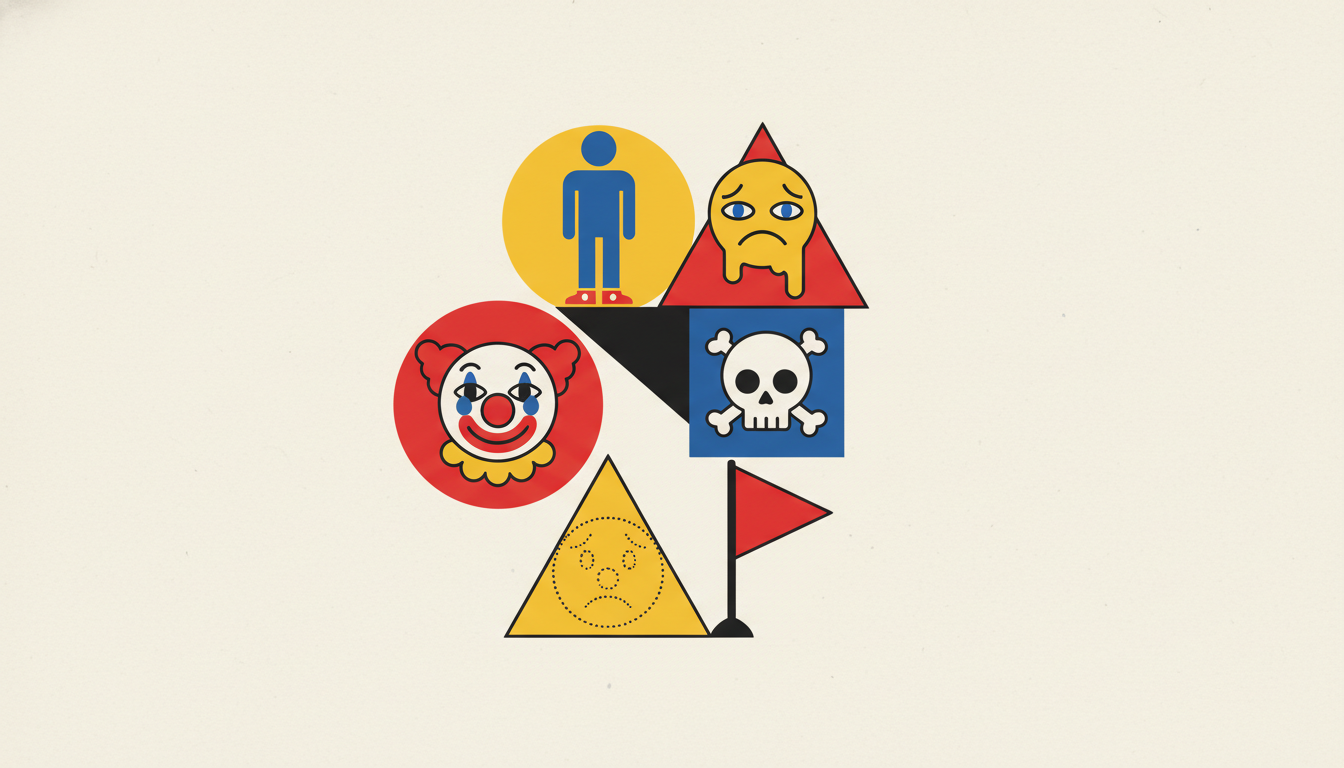
- 🧍 Person Standing Reads as "I am here but I do not know what to do with this." Sent after a chaotic message or an awkward reveal. It is the digital equivalent of standing very still while something embarrassing unfolds.
- 🫠 Melting Face Means "I cannot handle this and I am dissolving." Common after embarrassment, exhaustion, or being asked to do one more task. Almost never literal heat.
- 💀 Skull Still the dominant "I am dead" reaction to anything funny, awkward, or unhinged. It overtook 😂 around 2020 and has not given the position back. Use of 😂 by anyone under 25 now reads as parental.
The Soft Insult Set
Gen Z reserves a tight cluster of emojis for low-stakes mockery, almost always self-aware.
- 🤡 Clown Face Self-deprecation after being wrong, tricked, or naive. "Thought she was going to text back 🤡." It is rarely sent at someone else without crossing into actual hostility.
- 💅 Nail Polish Originally a beauty emoji, now used to underline a confident or unbothered statement. "Failed the exam 💅" means "I am choosing not to care about this."
- 🫥 Dotted Line Face Released in 2021 and adopted instantly. It signals invisibility, ghosting, or "I am pretending this conversation is not happening."
The Sincere Mask
A few emojis look earnest but almost always carry an edge.
- 🙃 Upside-Down Face Sarcasm, frustration, or quiet rage. The classic "everything is fine" while everything is not. Rarely sincere.
- 😭 Loudly Crying Face The current laughing emoji. The visual logic is "I am crying because this is too funny." Genuine sadness now belongs to 🥺 or 😔.
- 🥲 Smiling Face with Tear Bittersweet. Used after good news touched by something hard, or when something genuinely moving happens in a group chat. Closer to "this is beautiful and I might cry" than to sadness.
Hidden Romance and Hidden Rejection
Dating language hides inside emojis that look neutral on the surface.
- 👀 Eyes Means "I noticed and I have thoughts." Sent in response to a screenshot of a crush, a flirty text, or unexpected gossip. Often the only reply needed.
- 🫶 Heart Hands The new sincere love emoji. Replaced ❤️ in much of Gen Z chat because ❤️ now reads as something a parent sends. 🫶 means "I care about you" without the cringe ceiling.
- 🚩 Triangular Flag A relationship warning. One 🚩 means "that behavior is a problem." Five in a row means "delete the contact." Almost never literal.
- 🍃 Leaf Fluttering in Wind Has acquired a quieter meaning: blowing off plans, ghosting, or someone disappearing from a chat. "He hit me with the 🍃."
Emoji Stand-ins for Hard Conversations
Gen Z routinely uses food and object emojis to talk about things that would be uncomfortable to type.
- 🍃 + 🍪 Used in TikTok comments and group chats to refer to weed without flagging moderation filters. Common across casual stoner content.
- 🧠 Brain When sent after a flirty message, almost always implies oral sex. The most cited example of "emoji euphemism" in Gen Z research papers since 2022.
- 🦴 Bone Same family. Used in dating contexts to suggest hookup interest. Almost never refers to the literal body part.
- 🍑 🍆 🍒 Still the long-standing innuendo set. Mostly retired from sincere fruit usage. If a Gen Z friend texts you a peach, they are not talking about breakfast.
The Status Emojis
These signal social position in a chat without anyone saying it aloud.
- 🦅 Eagle Bro humor and meme patriotism, often ironic. Pairs with 🇺🇸 in jokes about American excess.
- 👑 Crown Hyping a friend. "She passed the bar 👑." Genuine praise but light enough to deflect any awkwardness.
- ✨ Sparkles Used around a phrase like ✨tired✨ to add ironic emphasis. Suggests the writer knows they are being dramatic and does it anyway.
What Older Audiences Get Wrong
The misreads cluster around three patterns. First, treating older emojis (😂 👍 ❤️) as universal. Inside a Gen Z thread, all three feel awkward, even hostile in the case of a lone 👍. Second, reading 💀 and 😭 literally as distress signals. A friend texting 😭 after a meme is laughing, not crying. Third, missing the layer of irony. ✨special✨ does not mean special. It means the opposite, said with a smile.
For mixed-generation teams, the safest move is to mirror tone. If a coworker under 25 sends 🫶 in a thank-you message, replying with ❤️ will read as warm but generationally off. 🫶 back keeps the register matched.
The Takeaway
Gen Z emoji slang is moving faster than any reference can track. The 🫥 dotted-line face barely existed five years ago. The 🦴 bone meaning will probably be replaced by another stand-in by 2027. The point of a guide like this is not to memorize a static dictionary. It is to notice when a familiar emoji is being used in an unfamiliar way, and to ask what the sender actually means before responding with the wrong tone.
The pattern underneath all of these is the same: a generation that grew up online treats emoji as language, not decoration. Every choice is doing work. Reading that work, instead of skimming past it, is what closes the gap between what was sent and what was meant.