
The "Hell of Money" Emoji Trend: Why TikTok Is Flexing in 💸🤑💰
August 12, 2026 · Bas Hennekam
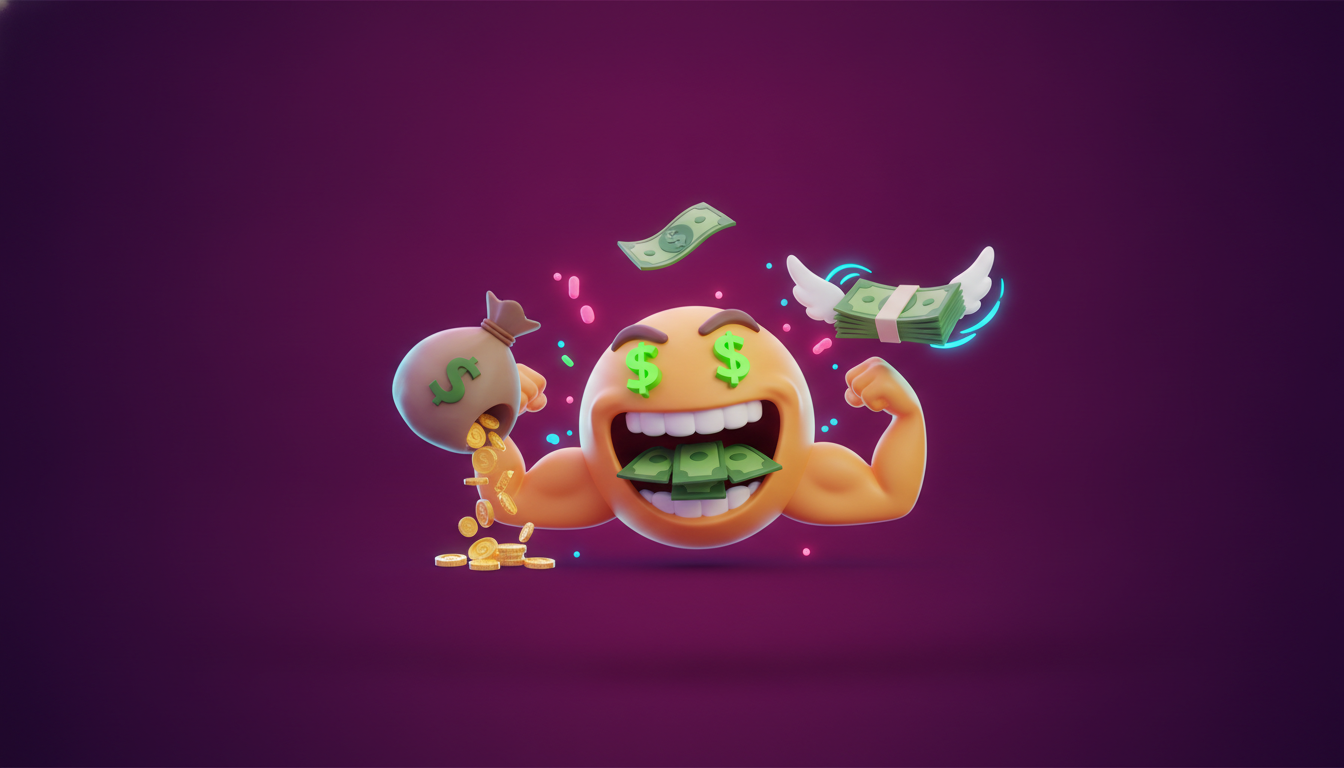
Open TikTok in August 2026 and you are one scroll away from someone declaring, dead serious, that they got "hell of money." Not "a hell of a lot of money." Not "so much money." Just "hell of money," clipped and blunt, dropped under a stack of receipts, a new pair of sneakers, or a suspiciously modest bank transfer screenshot. The caption is almost always the same three emojis: 💸🤑💰. The phrase makes no grammatical sense, and that is exactly why it works.
"Hell of money" is the emoji-and-slang combo dominating TikTok's money-flex content this month. It is loud, it is a little dumb on purpose, and it has already spread from finance meme pages to gaming clips to genuinely unrelated videos where someone just wants to caption a small win as if it were a lottery jackpot. This guide breaks down where the phrase came from, how the emoji trio does the heavy lifting, and why a grammatically broken flex became one of 2026's stickiest catchphrases.
Where "Hell of Money" Came From
Like most TikTok catchphrases, "hell of money" did not arrive with a clean origin story. It grew out of the same mumble-rap-adjacent, deliberately mangled English that gave the platform earlier hits like "gyat" and "he's so babygirl." The working theory among trend trackers is that "hell of money" is a clipped, over-enunciated version of "a hell of a lot of money," stripped down until only the punchiest two words survived. Someone said it in a clip, the delivery was funny, and the internet did what it always does: it kept the broken version and threw the grammatically correct one away.
By early August 2026 the phrase had fully detached from whoever said it first. It now functions as a standalone stamp, something you type under any post where the vibe is "I am rich, or at least richer than you expected." The irony is part of the design. Nobody using "hell of money" un-ironically actually believes the phrase is correct English, and that shared awareness is what makes it funny rather than just sloppy.
The Emoji Trio That Carries the Joke
Three emojis show up under almost every "hell of money" post, usually in this order: the money-with-wings 💸, the money-mouth face 🤑, and the money bag 💰. Together they form a visual shorthand that reads instantly, even without the caption attached.
Each emoji does a slightly different job. 💸 signals money moving fast, either coming in or flying out, which fits the trend's flex-first, details-later energy. 🤑 is the reaction shot, the exaggerated greed face that tells viewers "yes, I know how this looks, and I am leaning into it." 💰 closes the combo with a flat statement of fact: there is a pile of money involved. Stacked together, the three emojis compress an entire boast into a single glance, which matters on a platform where captions get maybe half a second of attention before someone scrolls.
Some creators extend the set with 🏦, 📈, or a single 💵 for variety, but the core 💸🤑💰 trio remains the recognizable signature. Drop those three characters under any video, no words required, and TikTok's algorithm-literate audience knows exactly which joke is being made.
Where the Trend Shows Up Most
Side hustle and small-win content
Creators posting modest wins, a $40 resale flip, a first paycheck from a new gig, a coupon stack that saved $12, caption them with "hell of money 💸🤑💰" specifically because the amount is small. The gap between the phrase's over-the-top energy and the actual dollar figure is the joke.
Gaming and loot drops
In-game currency drops, rare pulls, and lucky loot boxes get the same treatment. "Bro just got hell of money 💸🤑💰" under a screen recording of a video game jackpot has become a reliable comment-section reply, not just a caption format.
Finance and crypto meme pages
Unsurprisingly, the trend found a natural home in finance meme content, where it sits somewhere between genuine flex and self-aware parody of flex culture. Posts about market gains, bonus checks, or crypto pumps lean on the phrase precisely because finance TikTok already has a complicated relationship with sincerity.
Ironic broke-posting
The mirror version is just as common: someone captions an empty wallet, a $3 bank balance, or a maxed-out card with "hell of money 💸🤑💰" as pure sarcasm. This inverted use has arguably spread faster than the sincere flex, because the joke works even better when the money clearly is not there.
Why the Phrase Spread So Fast
"Hell of money" fits a pattern that has defined TikTok slang for years: a phrase becomes popular precisely because it sounds slightly wrong. Grammatically clean flex language, "I have a lot of money," carries none of the same charge. The broken version signals in-group awareness. Using it correctly means using it incorrectly on purpose, and that layered irony is catnip for a platform built on quick reads and shared references.
The emoji trio accelerates the spread further because it lets the joke travel without translation. A caption in English text needs a reader who understands English slang cadence. 💸🤑💰 needs nothing except emoji literacy, which is functionally universal on the app. That is a big part of why the format jumped from English-language TikTok into Spanish, Portuguese, and Filipino corners of the platform within roughly two weeks, each community keeping the same three emojis while translating or dropping the words entirely.
What Comes Next
Money-flex trends rarely last more than a season before a new phrase takes over, but the underlying format tends to survive its own catchphrase. Expect "hell of money" to fade the way "big yikes" and "no cap" eventually cooled off, while the 💸🤑💰 emoji trio quietly keeps working under whatever slang replaces it. If history is any guide, the next wave will swap the words and keep the money-with-wings, the greedy grin, and the money bag exactly where they are, because that visual shorthand has already done the hard work of becoming instantly readable.
For now, if you see a small win, a suspicious lack of funds, or an actual windfall captioned with three familiar money emojis, you already know exactly what is being said, whether or not it is technically true.