Heart Emoji Meanings: What Every Color and Style Really Says
May 13, 2026 · Bas Hennekam
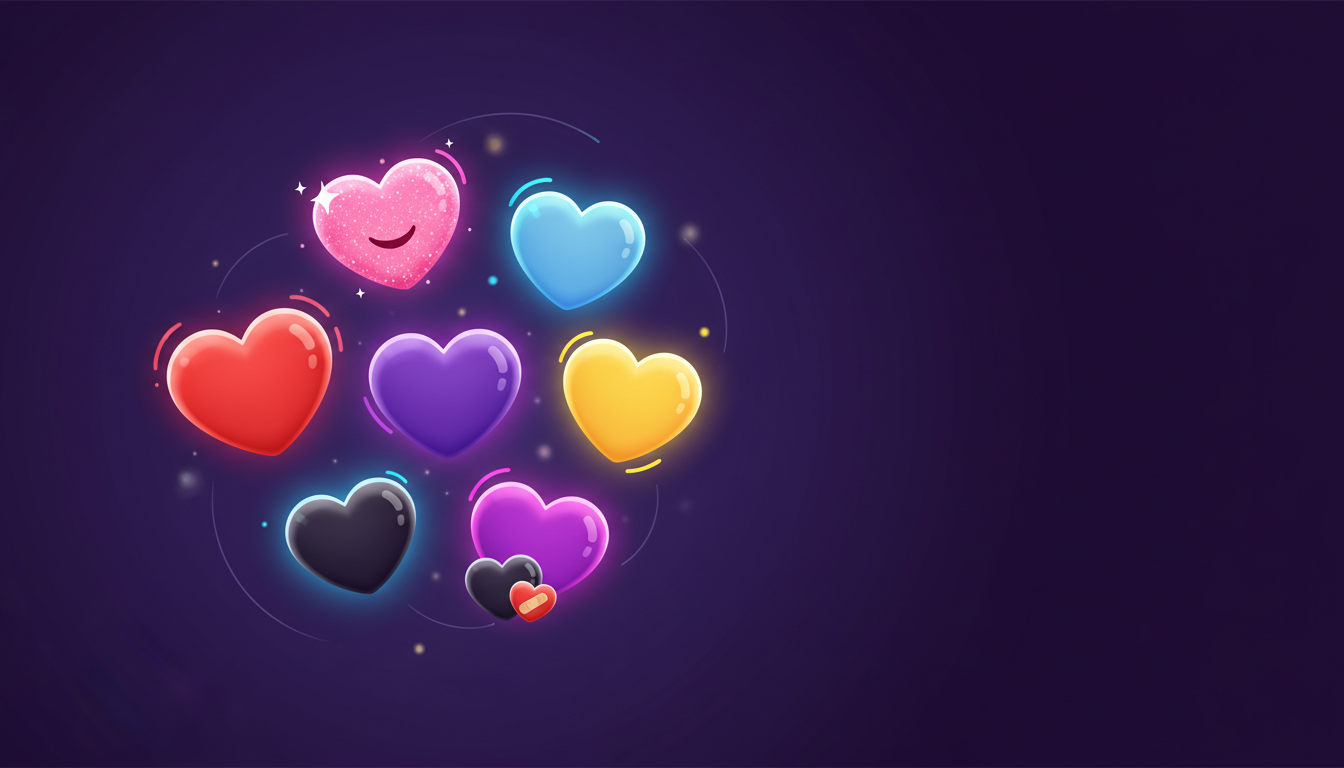
The heart is the most-used emoji on the planet. Unicode's annual usage rankings have placed some form of heart in the global top 10 every year since 2019, and the red heart ❤️ alone accounts for roughly 6% of all emoji sent worldwide according to Emojipedia's 2025 data. Yet despite how universal it feels, there is no single "heart emoji." There are more than 20 of them, and each one carries a slightly different signal. Send the wrong one and a sweet message can land as cold, sarcastic, or even passive-aggressive.
Why Heart Emojis Carry So Much Weight
Hearts compress emotion. A short text plus a heart often reads warmer than a paragraph without one. According to a 2025 study from Adobe, 64% of users say receiving a heart emoji in a message makes them feel more positive about the sender. That is more than any other category of emoji.
Hearts also do a lot of social work. They mark closeness in family chats, soften critique at work, signal romance in dating apps, and stand in for "thanks" or "I hear you" in everyday conversation. Because they are so layered, the choice of color and shape matters more than people often realize. 💗
The Color-Coded Heart Lineup
Each heart color has settled into a fairly consistent meaning across cultures, though there are platform and generational nuances worth knowing.
Classic and Romantic Hearts
- ❤️ Red Heart. The default. Universally read as love, deep affection, or strong support. Safe with partners, family, and close friends. Heavy in caption captions like "happy birthday ❤️" or "love this ❤️."
- 🩷 Pink Heart. Added to Unicode in 2023 and immediately popular. Reads as soft affection, friendship, gratitude, and warmth. Less intense than red, ideal for friends and brands targeting Gen Z.
- 💖 Sparkling Heart. Excitement plus love. Used for crushes, fan moments, and celebratory replies.
- 💗 Growing Heart. Conveys a swelling, almost overwhelmed feeling. Common in baby announcements and emotional posts.
- 💓 Beating Heart. Like 💗 but more nervous or anticipatory. Often used for "I cannot wait" moments.
- 💞 Revolving Hearts. Two hearts orbiting each other. Strong romantic or "we are in sync" energy.
- 💕 Two Hearts. A friendly, lighter version of love. Popular between friends, with kids, and in cute captions.
Cooler, Calmer Hearts
- 🩵 Light Blue Heart. Added in 2023. Soft and calm. Trust, peace, and gentle affection.
- 💙 Blue Heart. Loyalty, friendship, support. Used in cause campaigns (autism awareness, sports teams, mental health initiatives) and as a platonic alternative to red.
- 💚 Green Heart. Nature, growth, sometimes envy in older usage. Today it skews positive: sustainability, plant moms, Irish identity, and supportive notes from one wellness friend to another.
Bold and Warm Hearts
- 🧡 Orange Heart. Warmth, comfort, autumn vibes. Used by sports fans (Dutch teams, Tennessee, Texas Longhorns) and in cozy aesthetic content.
- 💛 Yellow Heart. Friendship and sunshine in most cultures. On Snapchat, 💛 has a specific meaning: it appears next to your #1 best friend. That platform-specific rule has shaped how some users read it broadly.
- 💜 Purple Heart. Originally tied to glamour and creativity, now strongly associated with BTS fandom ("I purple you" / "보라해"), Pride content, and military appreciation in the U.S. depending on context.
Edgy, Ironic, and Symbolic Hearts
- 🖤 Black Heart. Dark humor, edgy aesthetics, grief, and mourning. Often used in goth, alt, and minimalist content. Despite the color, it is rarely hateful and frequently affectionate among Gen Z.
- 🩶 Grey Heart. Added in 2023. Reads as neutral, melancholy, or understated affection. Popular in poetry-style posts.
- 🤍 White Heart. Purity, simplicity, weddings, and remembrance. Used a lot in minimalist branding and in posts honoring someone who has passed.
- 🤎 Brown Heart. Often used as a celebration of Black culture and identity, brown skin, coffee aesthetics, and earthy content.
- ❤️🔥 Heart on Fire. Passion, obsession, or "this slaps." Strong but playful.
- ❤️🩹 Mending Heart. Healing, after a breakup, or recovery posts. Empathetic and supportive.
- 💔 Broken Heart. Sadness or heartbreak, but also used hyperbolically for small disappointments ("they sold out of the shoes 💔").
- 💟 Heart Decoration. A heart inside a square. More symbolic than emotional, used mostly in design contexts.
- 💝 Heart with Ribbon. A wrapped gift of love. Common in Valentine's, anniversaries, and gift posts.
- 💌 Love Letter. Romance, nostalgia, or a stylized "I am sending you a thought." Popular in invitations and writing-themed content.
How Generations Use Hearts Differently
Heart emoji etiquette varies sharply by age. A 2025 YouGov survey reported that 71% of Gen Z respondents read a single ❤️ from a friend as standard and warm, while 38% of Boomers read the same emoji from a colleague as romantic or out of place. That gap is one of the most consistent generational emoji divides.
Gen Z tends to favor 🩷, 🩵, 🖤, 🤍, and 🤎. Millennials lean on 💖, 💕, 💛, and ❤️. Older users stick with ❤️ and 💜 most often. Brands targeting younger audiences have shifted their palette accordingly: 🩷 in particular has become a Gen Z marketing staple, appearing in launch campaigns from beauty, fashion, and beverage brands throughout 2024 and 2025. 🌸
Hearts at Work and in Sensitive Contexts
In workplace messaging, hearts have become more accepted. According to Slack's 2025 emoji report, ❤️ was the third most-used reaction emoji in business workspaces globally, behind ✅ and 🎉. That said, context still matters. 💖 or 😍 in a professional thread can feel out of place. A simple ❤️ on a thoughtful note tends to be the safest bet.
For sensitive moments, color choice carries weight:
- 🤍 and 🖤 are often used in posts about loss
- ❤️🩹 is used in healing or recovery contexts
- 💙 has become the standard color for cause campaigns
- 💜 is widely used in Pride, BTS, and military appreciation, and reading the context is essential
Cross-Cultural Notes
Heart meanings stay relatively stable globally, but some color associations shift. 💚 carries Irish identity in March, Saudi national pride during their national day, and Islamic cultural significance in some regions. 💛 in Latin America is sometimes linked to friendship rituals on Friend's Day. 🤎 has gained strong meaning in U.S. Black communities since 2020 and is now used widely worldwide in cultural and identity posts.
If you communicate internationally, default to ❤️ when in doubt. It is the cleanest, least platform-specific heart in the set.
Practical Tips for Picking the Right Heart
A few quick rules help:
- Match the closeness of the message. ❤️ for partners and family, 💕 or 🩷 for close friends, 💙 or 💚 for supportive but platonic notes.
- Mind your audience. Younger audiences read 🩷 and 🩵 as natural. Older audiences may not even have them on their keyboards yet.
- Use specialty hearts intentionally. ❤️🔥 and ❤️🩹 are powerful but specific. Save them for the right moment.
- In cause content, lean on color symbolism. 💙 for autism and mental health, 💜 for survivors and Pride, 💚 for environmental causes.
Looking Ahead
Heart emojis will keep multiplying. Demand for new shades (silver, peach, and lavender among the most-requested) sits high on Unicode proposal lists, and platforms increasingly add subtle animations to existing hearts in newer messaging apps. Expect the heart family to keep expanding, and expect generational and platform-specific meanings to keep splintering with it.
Picking the right heart is a small choice with surprising weight. The color and style you reach for shapes how the message lands, who feels seen by it, and what your brand or your voice quietly says about you. Choose with intent, and a heart still does what it has always done: it carries something true in a single character. 💗