Gen Alpha Emoji Slang: How Kids Born After 2010 Talk Differently Than Gen Z
September 9, 2026 · Bas Hennekam
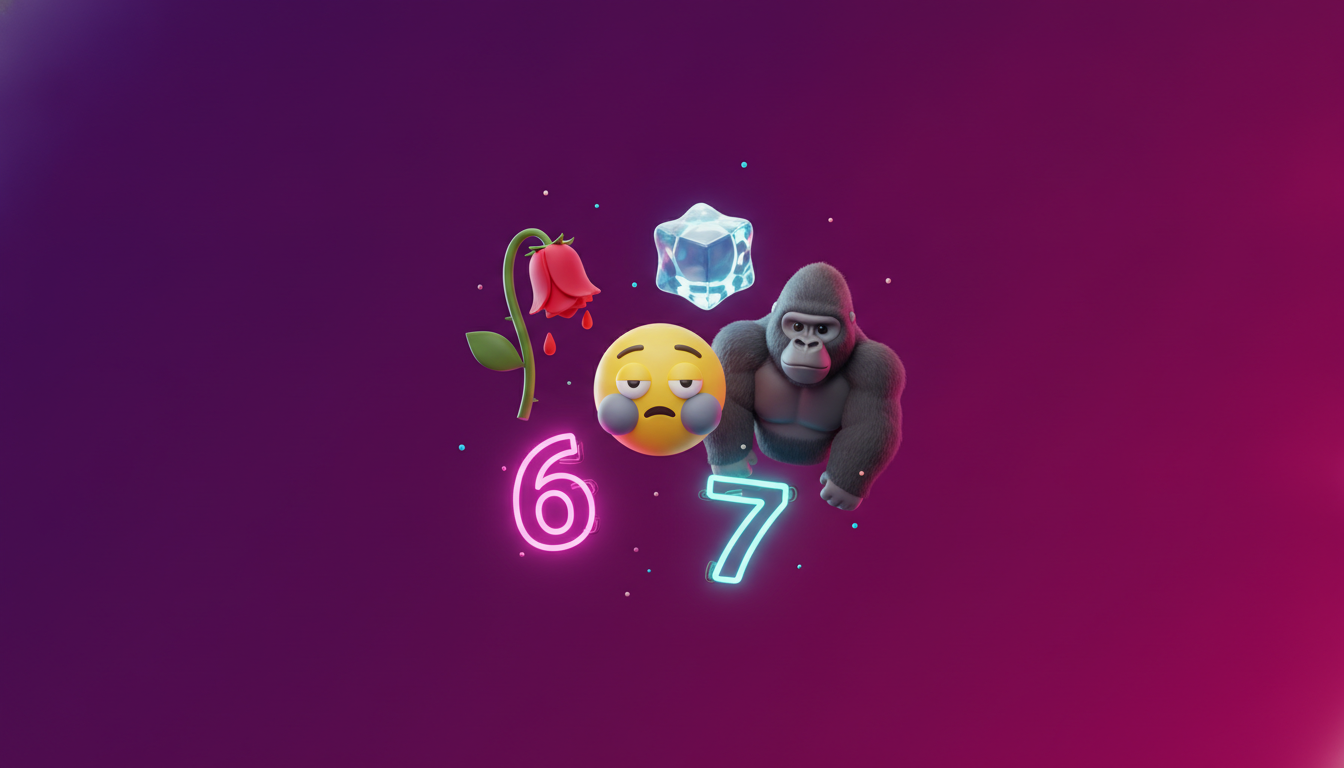
If a kid in your house has started shouting "six seven" while alternating hands in the air like a scale, congratulations, you have a Gen Alpha on your hands. The 6️⃣7️⃣ trend spread through elementary and middle schools so fast in late 2025 that some teachers banned the phrase outright, and by 2026 it had fully crossed over into emoji shorthand, dropped into group chats and comment sections with zero explanation needed. It is also a perfect example of something bigger: Gen Alpha does not just borrow Gen Z's emoji slang, it is building its own. 🐐
Gen Alpha Is Not Just a Smaller Gen Z
Gen Alpha, generally defined as people born between 2010 and 2024, is the first generation to grow up with touchscreen tablets and voice assistants already in the house before they could read. Where Gen Z grew into smartphones and texting as teenagers, Gen Alpha's youngest members are learning emoji as a visual vocabulary before they have full command of written language, often on school-issued Chromebooks, shared family iPads, or Roblox and YouTube Kids accounts long before they get a personal phone.
That different starting point shows up in how the two generations actually use emoji. Gen Z tends to treat emoji as commentary, layered on top of a sentence for tone. Gen Alpha increasingly treats emoji as the sentence itself, stringing together two or three symbols with no accompanying text and expecting the recipient to decode the full meaning from context and platform culture alone. 📱
Where the Split Shows Up Most
A few concrete differences separate how the two generations lean on emoji day to day:
- Fewer classic faces, more objects. Gen Z still leans on 😂, 💀 and 😭 as general reaction emoji. Gen Alpha reaches for objects and animals instead, like 🧊, 🥀 and 🦍, using them as full ironic statements rather than reactions to something else.
- Numbers as slang, not just quantities. The 6️⃣7️⃣ trend turned two digit emoji into a meaningless-on-purpose punchline, tied to a rap lyric that sounded like "six seven" and a hand-tilting gesture that has nothing to do with counting.
- Gaming culture as the primary pipeline. Where Gen Z's slang often started on Twitter or Vine, a large share of Gen Alpha's emoji vocabulary is minted inside Roblox lobbies, Discord gaming servers and Minecraft-adjacent content before it ever reaches TikTok.
- Shorter shelf life, faster rotation. Because the pipeline runs through algorithmic short-form video aimed at a very young, very online audience, Gen Alpha in-jokes tend to peak and fade in weeks rather than months.
The Current Gen Alpha Emoji Dictionary
Here is what is actually landing in Gen Alpha group chats and comment sections in 2026, separate from the broader Gen Z brainrot vocabulary already in wide circulation.
- 6️⃣7️⃣: the "six seven" meme, said or typed with an accompanying hand-tilt gesture. It means almost nothing on purpose, which is exactly why it spread. Typing the two number emoji together signals "I am aware of this joke," nothing more.
- 🥀: the wilted rose, used ironically to mean something has gone badly, socially or otherwise, without any real distress behind it. A missed goal in a video game, a bad joke that landed flat, a losing streak.
- 🧊: ice, meaning cold, ruthless, or unbothered in a way that is meant as a compliment. Landing a savage comeback or a clean win earns a 🧊 in the replies.
- : the face with bags under eyes, a relatively recent addition to the emoji set that Gen Alpha adopted fast as shorthand for being exhausted, checked out, or done with a situation, often used self-deprecatingly.
- 🇼 / 🇱: the flag-letter emoji reused entirely outside their intended meaning, standing in for "dub" (win) and "L" (loss). Common in gaming chat to instantly call a round.
- 🦍: gorilla, tied directly to the wildly popular Roblox game Gorilla Tag, used to signal chaotic, high-energy, slightly feral behavior as a badge of honor rather than an insult.
- 🐔: chicken, a direct callback to the "chicken jockey" moment from the 2025 Minecraft movie, which turned into a full theater-disrupting meme of kids yelling the phrase during screenings. The emoji alone now triggers the reference.
- 🌽: corn, a holdover from the "it's corn" viral clip and the broader "Ohio" meme shorthand for something being weird, cursed, or off in a specifically Midwest-coded way.
Why This Keeps Catching Adults Off Guard
The core reason Gen Alpha's emoji slang feels harder to track than Gen Z's is speed combined with source material. Gen Z's slang mostly traveled through platforms adults could at least observe, Twitter, Vine, early TikTok. Gen Alpha's slang is incubated inside gaming voice chats, Roblox servers, and YouTube Shorts aimed at an audience too young for most parents to be scrolling alongside them. By the time a phrase or emoji combo surfaces somewhere visible, like a classroom or a family group chat, it has often already been circulating among kids for weeks.
This mirrors a pattern already visible in how thumbs-up 👍 became a flashpoint between older and younger users online: a symbol one generation reads as neutral or friendly reads as cold or passive-aggressive to another. The same generational mismatch is now playing out again, just one step younger and one notch faster.
What Parents, Teachers and Brands Should Actually Do
A few practical takeaways for anyone trying to keep up:
- Do not assume Gen Alpha slang is a smaller version of Gen Z slang. Check the specific emoji or phrase rather than pattern-matching to what a teenager might mean.
- Treat sudden classroom-wide phrases, like "six seven," as a signal the trend has already peaked in its original online home and is now in its mass-adoption phase.
- Brands targeting this age group should be cautious about jumping on emoji slang directly. Gen Alpha's radar for a brand trying too hard is sharp, and burnout on a specific meme happens in weeks, not quarters.
- For parents, the goal is not fluency, it is pattern recognition: knowing that 🥀🧊 strung together in a chat is a joke format, not a cry for help, saves a lot of unnecessary worry.
What's Next
Expect the rotation to keep accelerating. With Unicode 18.0 due to land its next batch of emoji in mid-September 2026, including entirely new concepts like the pickle and the cracking face, Gen Alpha's pipeline of gaming servers and short-form video is primed to adopt and reinterpret at least one of them within days of release, likely stripped of its original intended meaning entirely. If history with and 🧊 is any guide, whichever new emoji is easiest to misuse for comic effect will win. 🎮