Facebook and Messenger's New Emojis in 2026: The Unicode 17.0 Rollout Explained
July 21, 2026 · Bas Hennekam
For a company that helped make the emoji reaction mainstream, Meta has spent 2026 in an unusual position: behind. While Apple, Samsung, and WhatsApp shipped the new Unicode 17.0 emoji set back in March, Facebook and Messenger were still serving an emoji library approved all the way back in 2022. That gap is finally closing. Here is what the Facebook and Messenger rollout brings, why it took so long, and what actually changes when you open a chat. 📱
First, What Is Unicode 17.0?
Every new emoji starts life as a code point approved by the Unicode Consortium, the body that standardizes text across every device on the planet. Unicode 17.0 was released on September 9, 2025, and it added seven brand new emoji code points. With skin tones and gender variations counted, that expands to 163 new options for your keyboard.
The headliners of the set are a mix of viral-ready faces and long-requested objects:
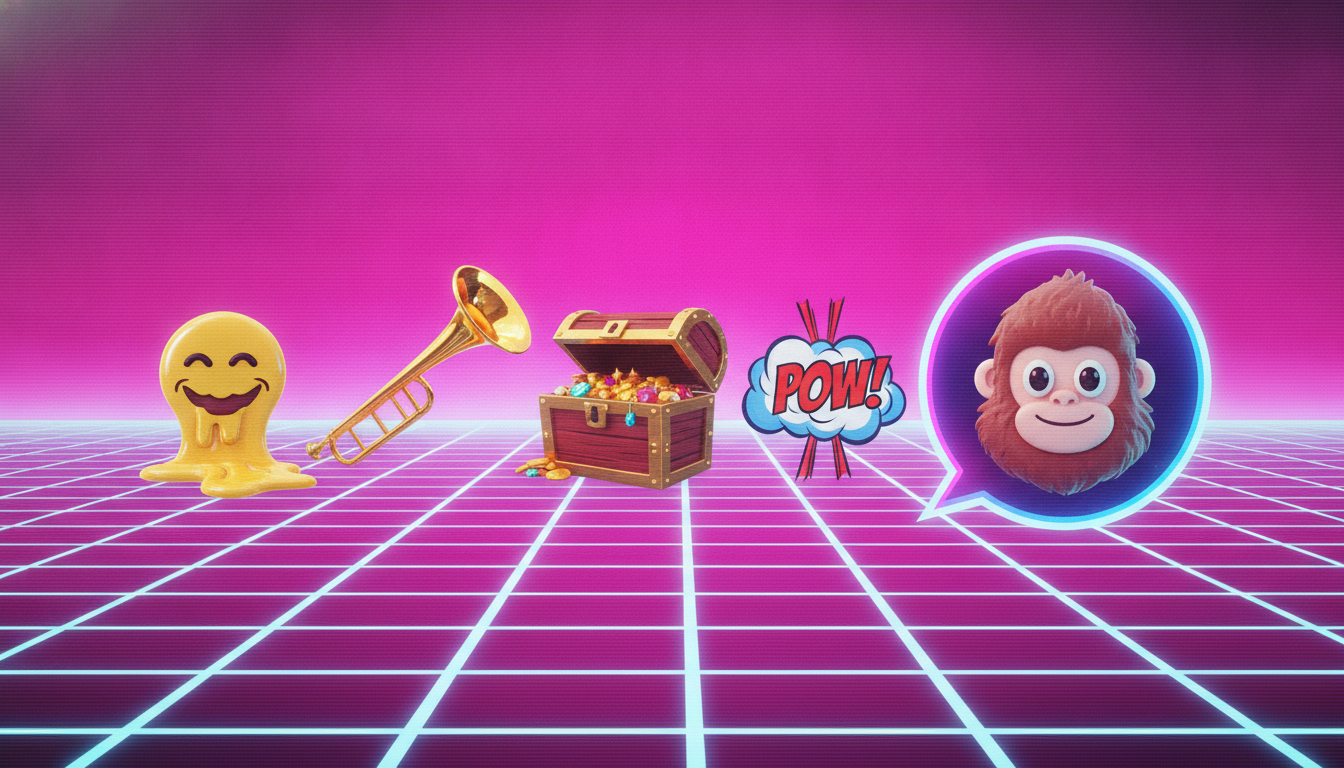
- Distorted face 😵: the warped, melting face that became the breakout viral emoji of 2026, shorthand for secondhand embarrassment and "I cannot process this"
- Hairy creature: a friendly Bigfoot-style cryptid, already a favorite for "just rolled out of bed" messages
- Trombone 🎺: the visual version of the sad "womp womp" sound
- Treasure chest: perfect for payday, a great find, or anything valuable
- Fight cloud: the classic cartoon dust cloud, ideal for group chat drama
- Landslide, orca, and ballet dancers: rounding out nature, animals, and activities
These are the same seven emojis landing across every platform in 2026. The only question was when each app would draw its own versions.
Why Facebook and Messenger Were So Far Behind
Here is the number that surprises most people: before this update, Facebook and Messenger were running on Emoji 15.0, a set finalized in 2022. That means Meta's platforms were missing not just the 2026 emojis, but several years of additions in between.
The reason comes down to how emoji rendering works. Apps like WhatsApp, Facebook, and Messenger do not simply use the emojis built into your phone. They ship their own custom artwork so that a message looks identical whether the sender is on an iPhone, an Android, or a browser. That consistency is the whole point, but it also means every single emoji has to be designed, animated in some cases, and pushed through Meta's release pipeline. When a platform falls behind, it falls behind in bulk. 🎨
The practical cost of that lag is real. When someone sent a distorted face from their iPhone to a friend scrolling Messenger, the recipient often saw a placeholder box ▯ instead of the joke. Cross-platform emoji only works when everyone has the artwork, and for most of 2026, Meta's billions of users were the missing piece.
The 2026 Rollout Timeline
To understand where Facebook and Messenger sit, it helps to see the wider 2026 schedule. Most major platforms moved in a tight cluster in March:
- WhatsApp: Emoji 17.0 on Android, March 6, 2026
- Apple: iOS 26.4, March 24, 2026, where the distorted face instantly went viral
- Samsung: One UI 8.5, March 25, 2026
Facebook and Messenger were expected to follow later in the year, with the rollout arriving through 2026 rather than in a single dated drop. Microsoft is on a similar path, with Emoji 17.0 support for Windows 11 expected around the summer and fall of 2026. The pattern is clear: the phones moved first, and the messaging and desktop platforms are the long tail catching up. ⏳
What Actually Changes in Your Chats
Once the update reaches your account, the differences show up in three places:
1. The emoji picker
Open the emoji keyboard inside Messenger and the seven new designs appear in their categories, smileys, animals, objects, and activities. If you have been copying the distorted face from another app to paste it in, that workaround is no longer needed.
2. Reactions
Messenger pioneered the six-emoji reaction bar that WhatsApp and Instagram later copied. The Unicode 17.0 update feeds the full picker behind that bar, so the new emojis become available as reactions too. Expect the trombone 🎺 and fight cloud to show up fast in group threads, since reactions are where playful emojis spread quickest.
3. Cross-platform consistency
This is the quiet but important one. Once Meta ships the artwork, a distorted face sent from an iPhone finally renders as a distorted face on Messenger, not a blank box. For a platform with billions of users, this is the moment Unicode 17.0 stops being an iPhone in-joke and becomes genuinely universal.
Why This Matters Beyond the New Faces
It is tempting to see seven emojis as a small update, but the scale changes the math. Meta's messaging platforms sit at the center of how a huge share of the world communicates, so an emoji is not truly mainstream until it works there. Research on digital communication consistently shows that emoji carry tone that plain text cannot, and a missing or broken emoji does not just look sloppy, it strips the intended emotion out of the message entirely. 💬
For brands and community managers, the update is a reminder to test before you post. An emoji-heavy campaign that looks perfect on iOS can still render as boxes for users on an outdated app version, so the safest bet during any rollout window is to lean on well-established emojis for anything mission critical, and save the brand-new ones for audiences you know are updated.
The Bigger Picture
Meta's catch-up is part of a larger rhythm that repeats every year. Unicode approves a set, phone makers ship first, and the apps that render their own artwork follow over the following months. The gap between "approved" and "actually usable everywhere" is where most of the friction lives, and 2026 has been a textbook example of it.
The good news is that the finish line is close. As Facebook, Messenger, and Windows 11 complete their rollouts through the back half of 2026, the distorted face and its companions will finally be truly platform-agnostic. And the cycle never really stops: the Unicode 18.0 draft list is already taking shape for 2027, with a cracking face and a pickle among the candidates. Check back later this week, when we dig into what is coming next. 🔮