Emoji Meanings for Parents: A Guide to Decoding Your Kids' Texts
August 3, 2026 · Bas Hennekam
A parent reads a text from their teenager that says "that test was 💀" and assumes the worst, until a quick search reveals it just means "hilarious" or "so bad it's funny." A few messages later, "no 🧢" shows up, and without context it reads as nonsense rather than "no lie." Common Sense Media's 2025 family technology survey found that 68% of parents say they regularly see emojis in their kids' messages that they do not fully understand, and 41% admit to guessing the meaning rather than asking. The gap is not really about emojis themselves. It is about a fast-moving slang layer riding on top of a symbol set that means something different to every generation. 💀🧢😭 A little translation goes a long way toward staying in the loop without hovering over every message.
Why Kids' Emoji Meanings Diverge From the Original Ones
Emoji meanings drift the same way slang always has, except faster, because platforms like TikTok and Discord push new usage to millions of people within days. Pew Research's 2025 teen communication report found that 73% of teens say emojis change meaning "constantly" based on context, tone, and whoever posted them. An emoji designed for one purpose gets reused ironically, then the ironic use becomes the default, then a new generation picks it up without knowing the original meaning at all.
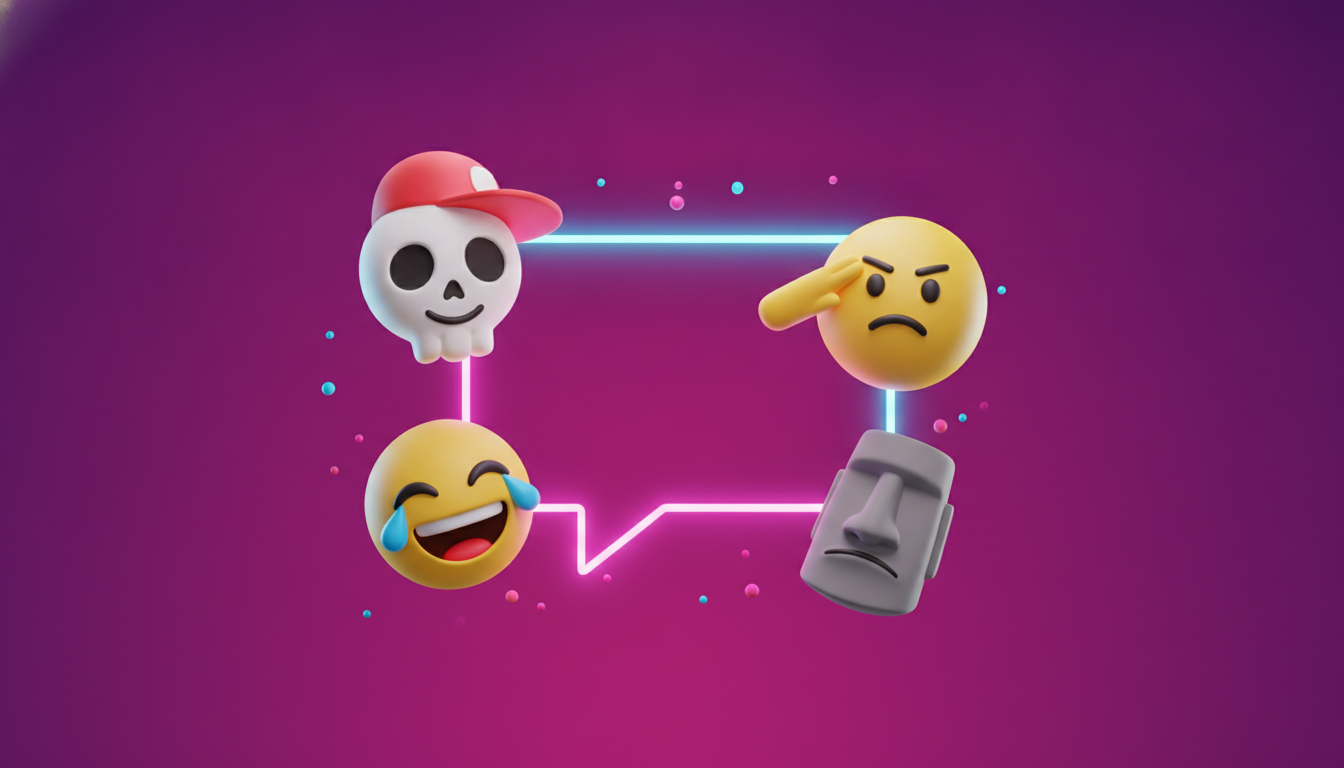
💀 is the clearest example. The skull was built to represent death. Teen and Gen Z usage flipped it into "I'm dead" as in "this is so funny I can't handle it," and it now functions as a stronger version of 😂 in most youth messaging. Adobe's 2025 Emoji Trend Report ranked 💀 among the five most-used emojis by users under 18, well ahead of its ranking among adults.
The Emoji Slang Parents Ask About Most
These are the emojis that show up most often in parent forums, school counselor newsletters, and family tech-safety guides as needing a translation.
Everyday Reaction Emoji
- 💀 Skull. "I'm dead" or "this is hilarious." Not a sign of distress on its own, though tone and context still matter.
- 😭 Loudly Crying Face. Almost always means intense laughter in teen use, not sadness. Functions like a stronger 😂.
- 🫡 Saluting Face. "Got it" or "noted," often used sarcastically to close out a conversation.
- 💅 Nail Polish. Confidence or nonchalance, roughly "not my problem" or "I did that."
- 🗿 Moai (Statue). Deadpan, unbothered, "I have nothing to say to that." Tied closely to brainrot-style humor.
- 🍑 or 👁️👄👁️. Used for exaggerated shock or awkward reactions, more about comic timing than literal meaning.
Slang and Shorthand
- 🧢 Cap. "That's a lie." The opposite, "no cap," means "I'm serious."
- 📈 Chart Increasing. Someone's reputation or mood is rising, often used after good news.
- 🔥 Fire. Something is excellent, a holdover from older slang that is still going strong.
- 💯 Hundred. Agreement or emphasis, "facts" or "exactly."
- 👀 Eyes. Flags something worth noticing, often used to tag someone into a conversation without a comment.
Emoji Combos Kids Actually Send
- 💀💀💀: Extreme laughter, more skulls means funnier
- 😭🙏: Laughing while pleading or begging
- 🧢🚫: Emphatic "that is definitely a lie"
- 🥀💔: Overly dramatic sadness, often used ironically
- 🫡✅: Task acknowledged and done
A Note on Safety-Related Emoji Codes
Most emoji slang is harmless fun, but some parents specifically want to know about emoji used as coded language in riskier contexts. The U.S. Drug Enforcement Administration published an emoji drug code reference in 2022 that is still widely cited by school districts, flagging combinations like ❄️ for cocaine, 🍁 for marijuana, and 💊 for pills in certain messaging contexts. The National Center for Missing & Exploited Children has also published guidance on emoji that can appear in grooming or exploitation contexts, including 🌽 and 🍆 used with sexual connotations.
Context is everything here. A single emoji almost never confirms anything on its own, and treating every 🍁 as a red flag will misread a lot of ordinary conversation, including actual autumn photos. The practical takeaway from child-safety researchers at organizations like Thorn is the same one that applies to teen slang in general: patterns and context matter more than individual symbols, and an open conversation works better than silent surveillance.
Practical Tips for Staying Fluent
A few habits help parents stay reasonably current without needing to memorize a constantly shifting dictionary.
- Ask, do not assume. A casual "what does that emoji mean in your friend group?" gets better information than guessing, and it signals curiosity rather than surveillance.
- Watch for pattern, not single symbols. One 💀 in a funny text is nothing. A pattern of emoji tied to secrecy, new contacts, or requests to keep something private is worth a direct conversation.
- Check reputable sources for fast-moving terms. Sites like Emojipedia track meaning shifts as they happen, which beats guessing from context alone.
- Remember meanings vary by platform and friend group. The same emoji can mean something different on Snapchat than in a family group chat, so local context always overrides a general definition.
- Model good emoji habits. Parents who use emojis naturally in their own messages, even imperfectly, tend to get more relaxed and honest reactions from kids than parents who never engage with the format at all.
Looking Ahead
Emoji slang will keep moving as fast as the platforms that spread it, and skull, cap, and moai are simply this year's version of a pattern that has repeated for over a decade. Brainrot-driven slang terms are already pushing the next wave of shifted meanings into mainstream teen messaging, and new emoji arriving through Unicode 18.0 later in 2026 will likely pick up their own unofficial definitions within weeks of release. The goal for parents was never to master every emoji in real time. It is to stay curious enough to ask, and to recognize when a pattern is worth a real conversation instead of a guess. 💬👨👩👧👦