Emoji 18 Thumb Gestures: What the New Left and Right Thumb Emojis Mean
October 7, 2026 · Bas Hennekam
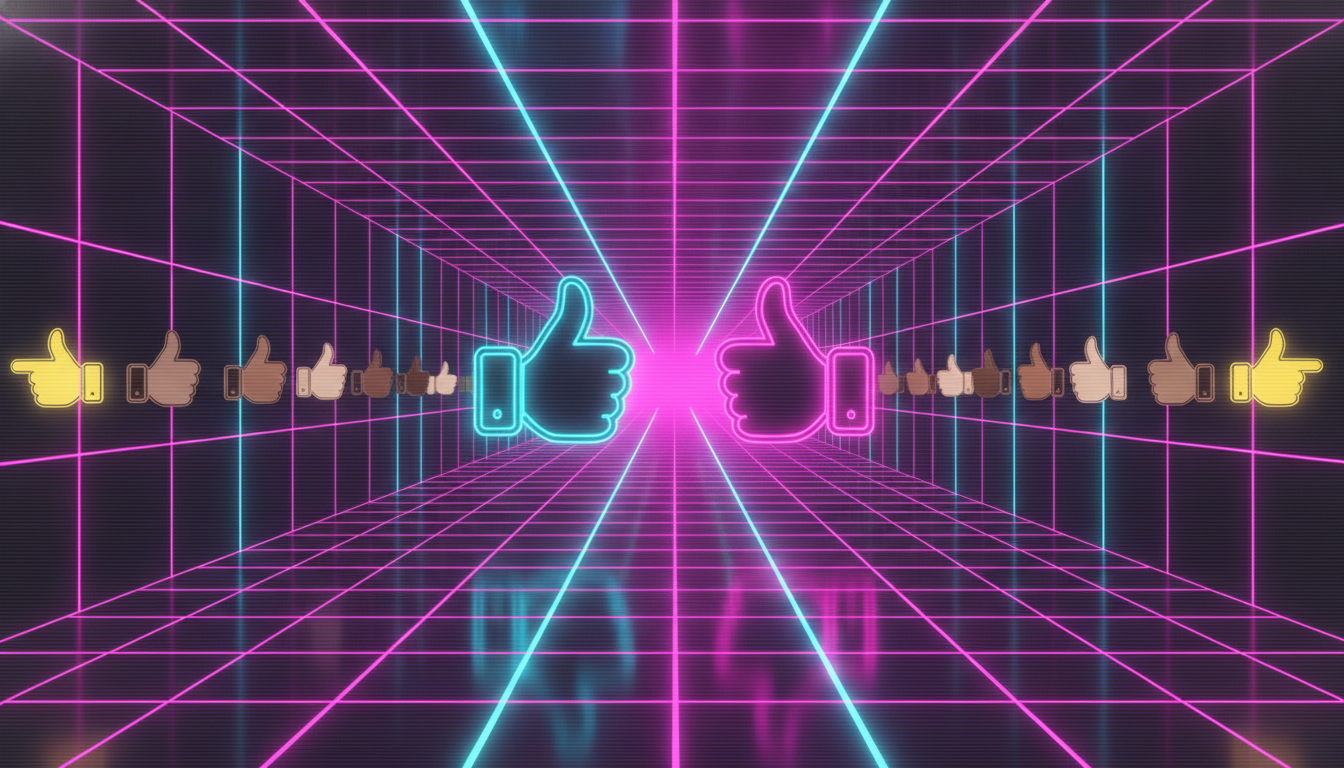
The thumbs up has been the most reliable reaction on your keyboard for over a decade. It also has a problem: it can only point one way, and it carries a lot of baggage. Unicode 18.0 gives the family two new members, a left pointing thumb and a right pointing thumb. They look like a small addition on paper. In practice, hand gestures are the fastest emojis to get adopted, so these two are worth understanding before they land on your phone. 👍
What Exactly Is New in Unicode 18.0
Unicode 18.0 was ratified on September 16, 2026. Among the 9 new concepts and 19 codepoints, the thumb gestures stand out because they are the only additions that come with skin tone options. Each gesture ships in 5 skin tone variants on top of the default yellow, which adds up to 10 extra codepoints for the pair.
That default plus five tones structure follows the Fitzpatrick scale, which Unicode introduced in 2015 with version 8.0. Since then, every new hand emoji has been built the same way, so the thumbs will behave exactly like 👍🏽 and 🫶🏾 when you long press them on your keyboard. 🖐️
The release date is separate from the ratification date. As we covered in our iOS 27 guide, Apple has shipped each Unicode set in its x.4 update for five years running, so the new thumbs are expected in iOS 27.4 around March or April 2027. Android often moves a little sooner.
What the Two Thumbs Are For
The official name tells you the core idea: the thumb is no longer only a thumbs up. It now points sideways, in both directions. Think of it as a hybrid between 👍 and the pointing hands 👈 and 👉, which have existed since Unicode 6.0 in 2010.
The likely uses fall into four groups:
- Direction and reference: "see the message above" or "check the link on the right" with a gesture that feels lighter than a full pointing finger.
- Casual agreement with a twist: a softer "this way, that one" nod, without the loaded workplace tone that 👍 now carries for many Gen Z readers.
- Hitchhiker and "over there" jokes: the thumb-over-the-shoulder gesture is a classic bit of body language, and emoji users love turning body language into punchlines.
- Reply threading: in chats where messages stack fast, a sideways thumb is a quick way to say "this one, not that one." 💬
Nothing is confirmed about how the internet will actually settle on meanings. Emoji meaning is decided by users, not by the Unicode Consortium, and the pickle and the cracking face will have competition for attention. Still, early signals from similar gestures give us a decent forecast.
What History Tells Us About New Hand Emojis
Hand gestures have a strong track record, and the data is easy to check:
| Emoji | Unicode version | Year | Skin tones |
|---|---|---|---|
| 👈 👉 pointing hands | 6.0 | 2010 | Added in 2015 |
| 🫱 🫲 leftwards and rightwards hand | 14.0 | 2021 | Yes, at launch |
| 🫷 🫸 pushing hands | 15.0 | 2022 | Yes, at launch |
| New thumb gestures | 18.0 | 2026 | Yes, at launch |
Two lessons come out of this table. First, directional hands are a proven category. 👉👈 became a full meme in its own right, the shy "pointing fingers together" move that Gen Z uses to soften a request. Second, the newer pairs show that Unicode now treats skin tones as a launch requirement, not an afterthought. That matters for inclusion, a topic we explored in our accessibility post. 🌍
The adoption pattern is worth noting too. 👍 consistently ranks in the global top 10 of most used emojis, and hand emojis as a category sit near the top of the keyboard because they replace a physical reaction people already make in person. A new gesture that mimics something people do with their hands has a head start over a new object like the lighthouse or the net. 🗼
How They Compare to 👍, 👈 and 🫱
It helps to place the new thumbs next to the old guard:
- 👍 thumbs up: approval, but often read as cold in work chats. The new thumbs do not have that history yet.
- 👈 👉 pointing hands: direct and a little cheeky. The new thumbs should feel friendlier and less pointed.
- 🫱 🫲 side hands: open, offering, handing something over. The thumbs are closed and more casual.
A fair guess is that the new thumbs will occupy the space between "approval" and "pointing", and that tone will vary by community. Gaming chats will likely turn them into reaction shorthand first, as happened with the skull and the pufferfish. 🎮
Skin Tones and Why They Matter Here
With a gesture this common, the skin tone choices decide whether people actually adopt it. A Unicode set where only the default yellow works would feel incomplete, and past rollouts show that users quickly stick to a tone that matches theirs. Expect the same sticky behavior: once your keyboard remembers your tone for the new thumbs, you will use them as often as you use your favorite 👍. ✨
One practical point: a mismatched fallback is the biggest risk during the rollout. Until your contacts update, they may see an empty box or a placeholder instead of the new thumb. For the first weeks, pair the new gesture with a familiar one, such as 👍 or 👈, so the message still reads.
How to Get Ready
- Keep automatic updates on, so the new set arrives the day your platform ships it.
- Watch the iOS 27.4 beta in early 2027, where new emojis usually show up weeks before the public release.
- Pick your tone early: your keyboard will remember it after the first use.
- Plan campaigns: brands that post in the first week after a launch tend to get the most reach, as we saw with every previous Unicode set. 📣
Looking Ahead
The two new thumbs are the quiet stars of Unicode 18.0. They will not get the headlines that the cracking face and the pickle get, but they are far more likely to end up in your daily messages. The next milestone is the iOS 27.4 beta, where we will see the actual designs and finally learn which way the thumbs really point. Until then, keep your 👍 handy, and mark the spring of 2027 on your calendar. 🚀