The Distorted Face Emoji 🫨: Meaning, Origin, and Why It Took Over 2026
June 3, 2026 · Bas Hennekam
Every few years a single emoji escapes the keyboard and takes over group chats, comment sections, and brand captions all at once. In 2026 that emoji is the Distorted Face 🫨. It arrived with Unicode 17.0, spread through TikTok comments faster than any other new icon, and is now mounting a real challenge to the long reign of 💀 as the default "I am deceased" reaction. If you have seen a warped, glitchy, slightly melting face under a chaotic video and wondered what it means, this guide breaks down the meaning, the origin, and the unwritten rules of using it well.
What the Distorted Face Emoji Means
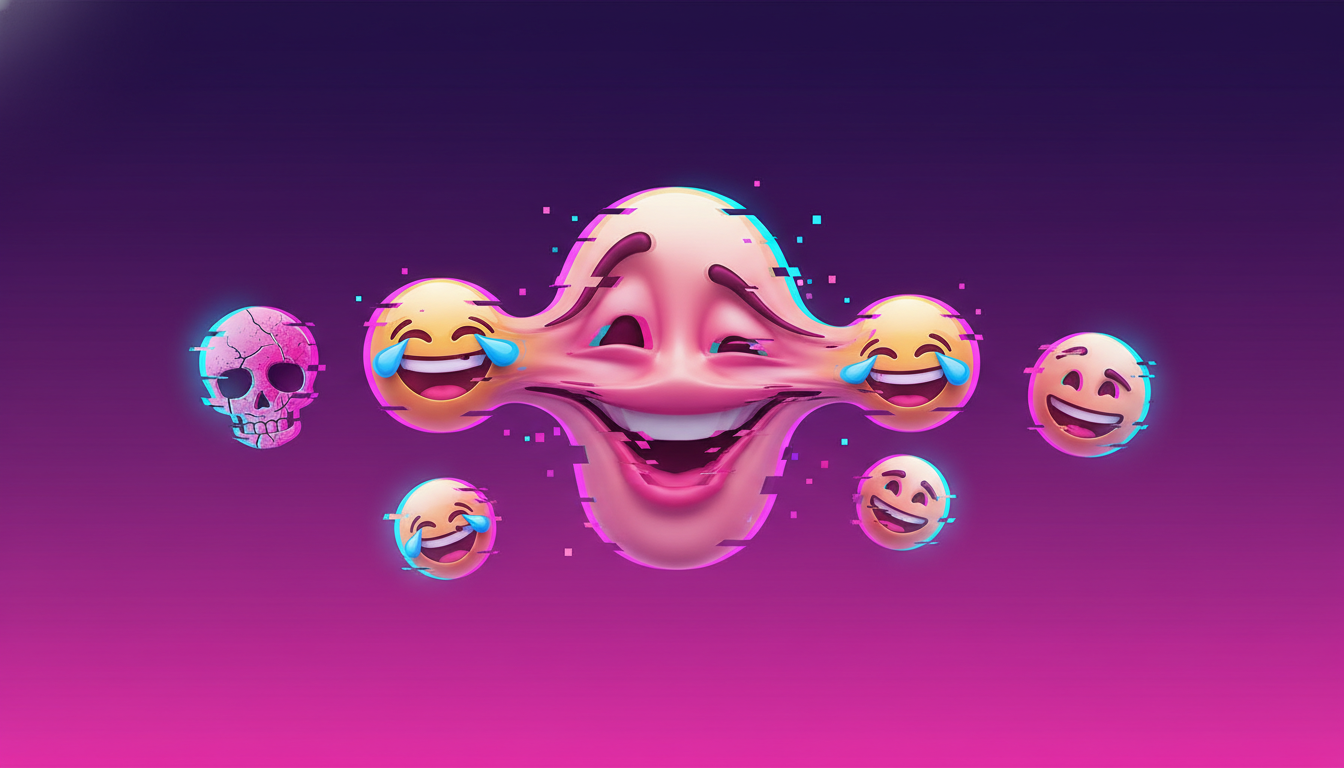
The Distorted Face shows a head stretched and warped as if caught in a glitch frame or a funhouse mirror. The eyes and mouth blur and smear, giving the impression of a face short-circuiting in real time. That visual does a very specific job: it captures the moment your brain stops processing.
In practice 🫨 means roughly "I cannot compute what I just saw." It sits in the same emotional territory as 💀 and 😭, but with a sharper edge. Where the skull says "this killed me" and the loudly crying face says "I am overwhelmed," the Distorted Face says "my brain has buffered and crashed." It works for secondhand embarrassment, for absurd plot twists, for cursed images, and for content so chaotic that a normal reaction would undersell it.
The nuance matters. 💀 is celebratory in its defeat. 🫨 is disoriented. It signals that the content did not just make you laugh, it scrambled your wiring. That extra layer of "this broke me" is exactly why younger users reached for it so quickly.
Where the Distorted Face Came From
The Distorted Face was approved as part of Unicode 17.0, which shipped on September 9, 2025, alongside the Orca, the Hairy Creature, the Treasure Chest, and the Trombone. The proposal framed it as a flexible expression of dizziness, disorientation, or a mind-blown reaction, leaving room for the internet to decide what it really meant.
The internet decided fast. According to Emojipedia preview tracking from March 2026, the Distorted Face was the single most-anticipated emoji of the entire Unicode 17.0 set before it even reached most keyboards. When the platform rollouts began in spring 2026, adoption was immediate:
- Apple shipped it with iOS 19.4 in April 2026, with a colorful rounded design that leans into the smeared, glitchy look.
- Google included it in Android 17, reaching stable in March 2026 through the Noto Color Emoji family.
- WhatsApp pushed it globally in April 2026, even to older devices, which put 🫨 in billions of hands almost overnight.
That combination of high anticipation and broad availability is rare. Most new emojis trickle into use over a year. The Distorted Face skipped the line.
Why It Took Over So Fast
A few forces lined up to make 🫨 the breakout star rather than just another new icon.
It filled a real gap. For years the reaction ladder ran from 😂 to 😭 to 💀. Each step escalated the intensity of "this is funny." But there was no clean symbol for "this is so unhinged my brain stopped working." The Distorted Face slotted into that empty rung perfectly.
It is visually loud. On a small screen, most face emojis read as small variations on a smile or a frown. The Distorted Face is instantly different. The smear and warp catch the eye in a crowded comment section, which rewards anyone using it with attention.
It rode TikTok. Per Emojipedia's May 2026 usage tracker, the Distorted Face outpaced every other new Unicode 17.0 emoji combined across TikTok and Instagram in its first eight weeks. Comment culture on short-form video rewards novelty, and 🫨 was the freshest reaction available the moment creators went looking for one.
How Gen Z Uses the Distorted Face
The Distorted Face has already developed a small set of conventions. Knowing them helps the emoji land the way you intend.
As a standalone reaction it works under any video or post that defies explanation. A single 🫨 in a comment says "I have no words, only static."
Stacked for emphasis, 🫨🫨🫨 reads as escalating disbelief, the visual equivalent of trailing off mid-sentence because your brain gave up.
Paired with the skull, 💀🫨 layers two reactions: "this killed me, and then it scrambled whatever was left." The combination is common under genuinely absurd content where one emoji alone feels insufficient.
Next to the loudly crying face, 😭🫨 softens the disorientation with warmth, often used for content that is overwhelming in an endearing rather than cursed way.
The throughline is intensity. People reach for 🫨 when 💀 is not strong enough, which is a notable shift given how dominant the skull has been since the late 2010s.
Distorted Face Versus the Skull
The skull 💀 has owned the top of the Gen Z reaction ladder for years, shorthand for "I am dead, this is too funny." The Distorted Face does not replace it so much as escalate past it.
Think of them as neighbors on a scale. 💀 is the punchline reaction, clean and final. 🫨 is the overload reaction, messy and ongoing. A joke earns a skull. A genuinely cursed, brain-breaking moment earns a Distorted Face. As novelty fuels its spread, 🫨 is increasingly the choice when users want to signal that something went beyond merely funny into genuinely destabilizing territory.
Whether it permanently dethrones the skull is an open question. Novelty effects fade, and the skull has staying power. But for now, the Distorted Face is the emoji of the moment.
Practical Tips for Using It Well
A few habits keep 🫨 feeling intentional rather than try-hard.
- Save it for genuine overload. The Distorted Face loses its punch if you use it for mild amusement. Reserve it for content that actually scrambles you.
- Do not pile it on. One or two 🫨 land. A wall of them reads as forced.
- Mind older devices. Phones that have not updated past early 2026 may show a tofu box ☐ instead of the emoji. For broad audiences, pair it with text that stands on its own.
- Match the chaos. The Distorted Face fits unhinged, absurd, or cursed content. Under a calm or wholesome post it sends a confusing signal.
Looking Ahead
The Distorted Face is the clearest example yet of how a single Unicode addition can reshape digital conversation within weeks of launch. It filled a gap, caught the eye, and rode short-form video to the top of the reaction ladder faster than any emoji in recent memory. Whether it holds that position or fades as the next batch arrives, it has already changed how a generation signals "this broke my brain." Keep an eye on World Emoji Day on July 17, when Apple traditionally previews its next designs. The reaction ladder is still being rewritten, and right now 🫨 is holding the pen.