
Animal Emojis: The Complete Guide 🐶 🦊 🐝 to Meanings and Hidden Slang
June 22, 2026 · Bas Hennekam
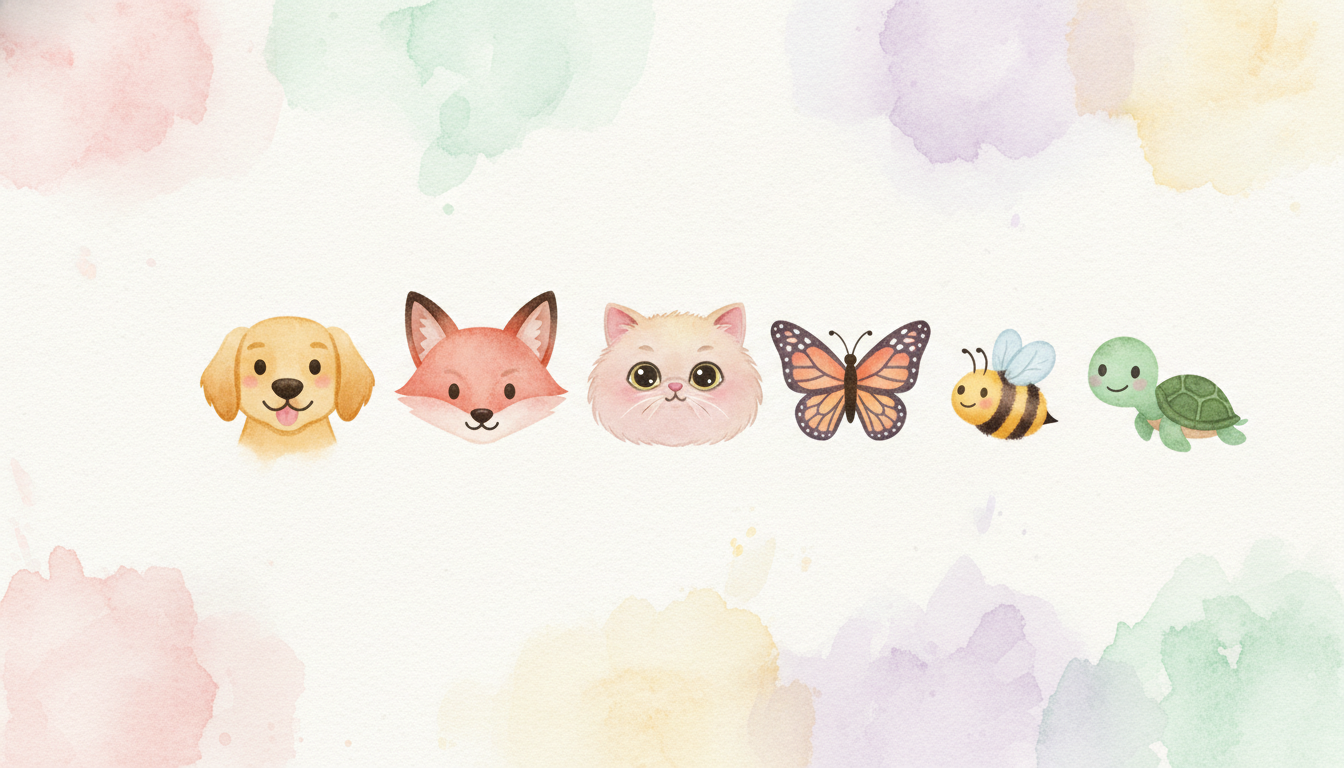
Unicode currently carries more than 140 animal emojis, from the household 🐶 dog and 🐱 cat all the way out to the 🦫 beaver, the 🦤 dodo, and the 🦣 mammoth. That is one of the largest single categories on the entire keyboard, and it is still growing almost every year. Animals are the emojis we reach for when words feel too plain, because a single creature can carry affection, a joke, an insult, or a whole personality in one character.
This guide walks through the animal emojis people actually use, the slang meanings hiding behind the cute faces, and how to choose the right animal so your message lands the way you intend.
Why Animal Emojis Are So Heavily Used
Animals occupy a strange and powerful spot in emoji language. They are friendly enough for a child to use and loaded enough for adults to send each other coded messages. A 🐶 reads as warmth and loyalty to almost everyone on earth, while a 🐍 in the wrong group chat can end a friendship.
Part of the reason is universality. You do not need a shared language to understand that a 🦁 lion means strength or that a 🐷 pig is being called greedy. These associations are ancient, they cross cultures, and emoji simply digitized them. That makes animals some of the most reliable symbols on the keyboard, even as their slang meanings keep shifting underneath.
The Most-Used Animal Emojis
A handful of animals do the heavy lifting in everyday messaging. These are the ones that show up again and again across platforms.
The pets lead the pack. 🐶 the dog face and 🐱 the cat face are the everyday favorites, used both literally and as stand-ins for "aww" and pure affection. 🐾 the paw prints often tag along to signal a pet account, a walk, or a cute moment.
Then come the expressive primates. 🙈 🙉 🙊 the three wise monkeys are among the most-sent animal emojis in the world, almost never used to mean actual monkeys. 🙈 means "I cannot look," usually out of embarrassment or secondhand cringe. They are reaction emojis first and animals second.
The small and the striking round out the top tier. 🦋 the butterfly, 🐝 the bee, 🐢 the turtle, 🦊 the fox, and 🐙 the octopus all see heavy use because they are visually distinct and emotionally flexible. They can be literal one moment and pure mood the next.
Hidden Slang: The Animals That Mean Something Else
This is where animal emojis get interesting. Several creatures have picked up second meanings that have almost nothing to do with the animal itself.
🐐 The GOAT
The goat is the clearest example. 🐐 stands for "Greatest Of All Time," the acronym G.O.A.T., and it follows athletes, musicians, and anyone being praised as the best in their field. Send 🐐 after someone's name and you are crowning them, not comparing them to livestock.
🐍 The snake
🐍 is the betrayal emoji. It marks someone as fake, two-faced, or a backstabber, and it famously went viral in 2016 as a mass social-media pile-on symbol. Drop a single 🐍 under a post and the meaning is unmistakable: this person is not to be trusted.
🦋 The butterfly
🦋 carries that fluttery, nervous excitement, the literal "butterflies in my stomach" you get around a crush. It signals a new romance, a hopeful feeling, or a soft transformation, and it has become a quiet staple of flirty messaging.
🐸 The frog
🐸 has a layered history. For years it paired with ☕ in the "but that is none of my business" meme, a way to deliver shade and then pretend to sip tea about it. It still reads as sly commentary, a knowing little side-eye in animal form.
🦄 and 🐝
🦄 the unicorn means rare, magical, or one of a kind, and it has specific community meanings too, so context matters. 🐝 the bee often stands in for "be," as in "just bee yourself," or signals busyness and hustle. Small animals frequently get recruited as puns this way.
Animals That Read as Compliments or Insults
Animals are some of the most efficient ways to describe a person without spelling it out.
On the flattering side: 🦁 means brave or dominant, 🦅 the eagle reads as freedom and sharp vision, 🐺 the wolf signals a lone operator or quiet strength, and 🦋 marks someone undergoing a glow-up. Calling someone 🐐 is the highest praise on the list.
On the cutting side: 🐍 brands a traitor, 🐷 implies greed or messiness, 🐀 the rat marks a snitch or a coward, 🦆 sometimes gets used to call out odd behavior, and 🐑 the sheep accuses someone of blindly following the crowd. The same toolkit that hands out compliments hands out insults, and the only difference is which animal you pick.
The Growing Zoo: New Animal Emojis
The animal category keeps expanding. Recent Unicode releases have added the 🦭 seal, the 🦫 beaver, the 🦬 bison, the 🪿 goose, the 🪼 jellyfish, the 🐦⬛ black bird, and even extinct creatures like the 🦤 dodo and the 🦣 woolly mammoth. The 2024 and later updates leaned into wildlife and birds in particular, reflecting how often people want a specific animal rather than a generic one.
This matters because specificity is becoming its own kind of slang. A 🦦 otter now carries a cozy, playful internet energy. A 🪿 goose reads as chaotic and a little menacing, thanks to a famous video game. As the zoo grows, each new animal arrives with a blank slate that the internet quickly fills with meaning.
How to Pick the Right Animal
A few practical rules keep your animal emojis landing correctly.
Match the energy to the relationship. 🐶 and 🐱 are safe with anyone. 🐐 and 🐍 carry strong, specific meanings, so only send them when you are sure the other person reads the slang the same way.
Watch the platform. The 🦊 fox, the 🐸 frog, and the 🐍 snake all look noticeably different on Apple, Google, and Samsung devices, and a few animals shift just enough in expression to change the vibe. The meaning usually survives, but the cuteness does not always translate.
Lead with one strong animal rather than a menagerie. A single well-chosen 🐐 says more than a row of five random creatures. As with all emoji, restraint reads as confidence.
The Takeaway
Animal emojis are a full language of their own, capable of warmth, wit, praise, and quiet insult all from the same friendly-looking set. Learn the core favorites, respect the slang behind 🐐 🐍 🦋, and remember that the zoo keeps growing every year. The next time you reach for an animal, you are not just picking a cute picture. You are picking exactly how you want to come across 🐾.